Confidence vs Ego: Quick Test, Checklist & Daily Builders
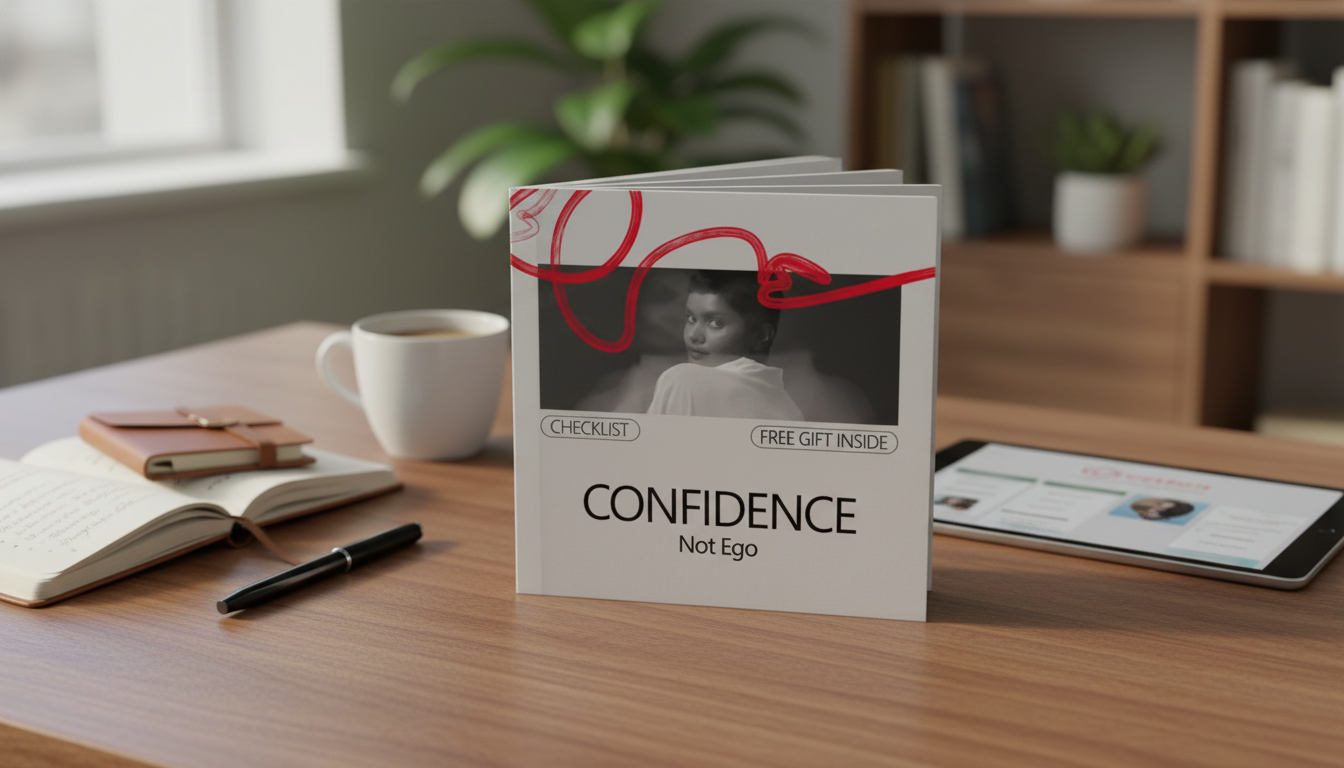
Confidence, Not Ego: A Simple Checklist, Quick Test, and Daily Builders
Confidence is quiet and grounded; ego is loud and fragile. When confidence is driving, growth feels steady and relationships feel safe. When ego is driving, everything starts to feel like a performance—where being right matters more than being real. Use the quick test below to spot what’s running the moment, then build the kind of confidence that holds up under feedback, mistakes, and pressure.
Confidence vs Ego in One Minute
Confidence is a steady belief in the ability to learn, contribute, and handle outcomes without needing constant validation. It doesn’t require an audience.
Ego is a self-image that must be protected, proven, or made superior—often at the expense of truth, feedback, or connection.
- Fast tell: confidence seeks clarity; ego seeks status.
- Result difference: confidence improves performance over time; ego creates short-term wins and long-term friction.
A helpful lens is self-worth stability: when self-worth is stable, feedback becomes information instead of a threat. For background on how self-esteem is defined in psychology, see the American Psychological Association (APA) Dictionary: self-esteem.
A Quick Test: Which One Is Driving This Moment?
When emotions run hot, the goal isn’t to shame yourself—it’s to get honest quickly. Ask these questions in real time:
- “If nobody knew I did this, would I still want to do it?” (confidence tends to say yes; ego often says no)
- “What would change my mind?” (confidence has conditions; ego has excuses)
- “Can I name one thing I might be missing?” (confidence stays curious; ego gets defensive)
- “Am I optimizing for outcome or for looking right?”
Score it: for each question, give 1 point for a grounded answer and 1 point for a defensive/status answer; whichever side has more points is likely in control.
| Situation cue | More like confidence | More like ego |
|---|---|---|
| Getting feedback | Asks clarifying questions; takes notes | Argues, explains, or dismisses |
| Making a mistake | Owns it and adjusts | Blames, hides, or over-justifies |
| Achieving a win | Credits team and process | Needs recognition and comparison |
| Facing a challenge | Breaks it into steps | Postures, exaggerates, or avoids |
| Disagreement | Seeks shared truth | Seeks dominance or “winning” |
What It Means to Have Confidence Without Ego
- Competence-based: confidence comes from reps, evidence, and reflection—not from image management.
- Secure identity: self-worth stays stable even when a task goes poorly.
- Humility without shrinking: you can be proud of progress while staying open to improvement.
- Boundaries without superiority: you can say no, hold standards, and lead without demeaning others.
This is also why strong teams value learning cultures: the best ideas survive disagreement because people aren’t fighting to protect a persona. For practical leadership and feedback principles, Harvard Business Review has extensive research-backed writing on learning, coaching, and performance.
Daily Confidence Builders That Don’t Feed Ego
Confidence grows fastest when it’s tied to behavior. Keep it simple and measurable:
- Micro-commitments: pick one tiny action that proves reliability (5–15 minutes) and finish it daily.
- Skill receipts: keep a short log of what was practiced, what improved, and what still needs work.
- Reality-based self-talk: replace “I’m great” with “I can handle the next step.”
- Process praise: reward consistency, not applause (sleep, movement, focused work blocks).
- Ask for one specific critique: targeted feedback builds trust in growth rather than image.
If you want a ready-to-use, printable structure for this, the Confidence, Not Ego – Checklist to Understand Confidence vs Ego Explained Simply | Daily Builders, Ego Traps, AI Tips & Quick Test keeps the daily builders, quick test, and reflection prompts in one place for easy repetition.
Ego Traps That Masquerade as Confidence
Ego often looks like confidence at first—especially in competitive environments. Watch for these patterns:
AI Tips: Simple Prompts for Self-Check and Course Correction
When the goal is better relationships, communication skills matter as much as self-awareness. For a practical companion on speaking with warmth and sincerity, The Art of a Real Compliment: How to Give a Genuine Compliment in Every Situation supports the “confidence without dominance” style that keeps trust intact.
The Confidence-Not-Ego Checklist (Use Daily or Before High-Stakes Moments)
Real-Life Scenarios: What Confidence Looks Like (and What Ego Looks Like)
Over time, confidence produces calm consistency—while ego produces spikes of intensity followed by defensiveness and exhaustion. If you like tracking progress with a skill-building mindset, a completely different (but aligned) example of “confidence through preparation” is Bicycle Touring Tips – The Ultimate Bicycle Touring Tips Guide for Planning, Packing & Riding with Confidence | Digital Download, which reinforces the same principle: capability grows from planning, practice, and iteration.
A Simple Tool to Keep It Practical
- Use a structured checklist when emotions run hot and decisions matter more than appearances.
- Keep the checklist visible for daily reflection, quick tests, and pre-conversation preparation.
- For a ready-to-use version with daily builders, ego trap reminders, AI tips, and a quick test format, see: Confidence, Not Ego – Checklist to Understand Confidence vs Ego Explained Simply | Daily Builders, Ego Traps, AI Tips & Quick Test.
FAQ
Is having confidence an ego?
No. Confidence is grounded in capability and openness to feedback, while ego depends on protecting an image and “being seen” a certain way. One quick divider is how you respond to mistakes: confidence owns and adjusts; ego deflects or blames.
What does it mean to have confidence without ego?
It means having secure self-worth while staying willing to learn. Common signs include owning errors, sharing credit, setting boundaries without superiority, and focusing on process and improvement rather than applause.















Leave a comment