20-Ton Air Hydraulic Bottle Jack: Specs, Safety, Use
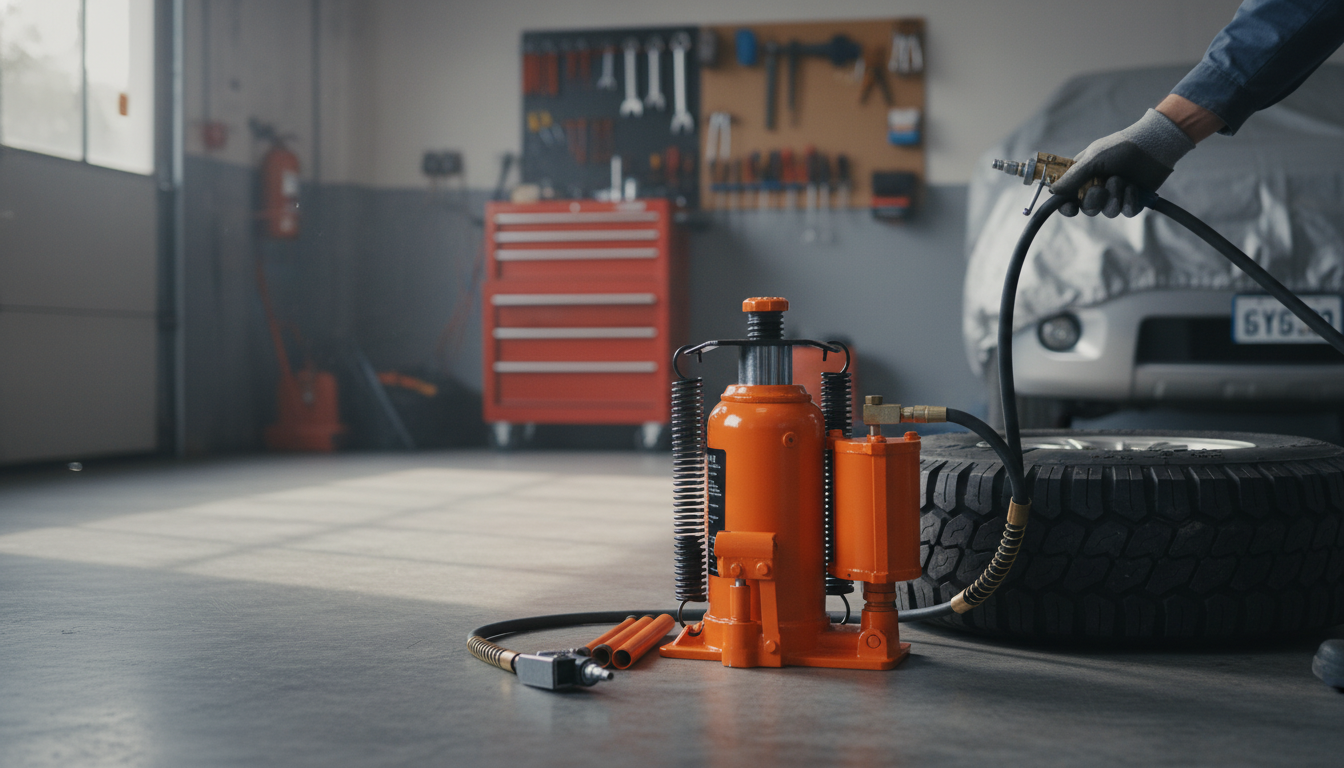
20 Ton Air Hydraulic Bottle Jack for Fast, Controlled Heavy Lifting
A 20-ton air hydraulic bottle jack combines the speed of air assist with the control of hydraulic lifting for heavier vehicles and equipment. It’s a practical tool when you want faster lifting than a manual bottle jack, but still need steady, predictable height changes for jobs like tires, brakes, suspension components, and trailer service. The key is choosing a jack that fits your lift points and using it the right way: lift smoothly, then support the load with properly rated jack stands before working.
What an Air Hydraulic Bottle Jack Does Best
Air-assist bottle jacks shine when you’re doing repeated lifts throughout a day. Instead of constant manual pumping, shop air helps raise the ram with less fatigue, while the hydraulic system keeps the motion controlled.
- Air assist reduces manual pumping effort, speeding up repetitive lifts during tire, brake, and suspension work.
- Hydraulic control supports steady lifting and lowering when precise height adjustments matter.
- Bottle-jack form factor fits many truck frames, trailers, and equipment where a low-profile floor jack may not reach the lift point easily.
- Best used for lifting (not supporting): always transfer the load to appropriately rated jack stands after raising.
Key Specs to Confirm Before Buying or Using
Before a jack ever touches a vehicle, confirm it matches the job. A “20-ton” label is only meaningful when the lift range, starting height, stability, and air requirements line up with your vehicle and your workspace.
- Capacity: match the rated capacity to the portion of the vehicle being lifted, not just the vehicle’s gross weight.
- Minimum height and maximum lift range: verify it fits under the lift point at the starting height and reaches the required working height.
- Ram and screw extension: understand how much adjustment is mechanical (screw top) versus hydraulic stroke.
- Air requirements: confirm shop air compatibility (typical quick-connect fittings) and ensure the compressor can supply stable pressure.
- Base size and stability: a wider base helps on imperfect concrete; use a solid pad on asphalt or softer surfaces.
- Handle and controls: look for predictable release/bleed-down control to avoid sudden drops.
For a safety baseline and terminology used across lifting devices, consult ASME PALD (Portable Automotive Lifting Devices) and review applicable vehicle servicing guidance from OSHA.
Safety Checks That Prevent Most Lifting Incidents
Most problems happen before the jack even starts lifting: wrong lift point, uneven surface, or skipping supports. A few consistent checks reduce the risk of sudden shifts and unstable loads.
- Lift points: use manufacturer-recommended lift points; avoid thin sheet metal, plastic shields, or rusty pinch welds without adapters.
- Surface: lift only on level, hard ground; use a thick wood or composite pad if the surface is questionable.
- Wheel restraint: apply parking brake, use wheel chocks, and keep the transmission in Park (or in gear for manuals).
- Support after lift: place jack stands under solid points and lower the load onto the stands before working underneath.
- Hands clear during lowering: keep clear of pinch points and ensure the release valve is controlled for a slow descent.
- Tool condition: stop using the jack if it leaks, binds, sinks under load, or shows damaged seals/frames.
How to Use an Air Hydraulic Bottle Jack Smoothly
Controlled lifting is about setup and small, deliberate movements. A bottle jack is compact and powerful, but it has less “self-centering” forgiveness than a rolling floor jack—so alignment matters.
Common Use Cases (and When to Choose a Different Jack)
Quick Comparison: Air Hydraulic Bottle Jack vs Manual Bottle Jack vs Floor Jack
| Type | Strengths | Trade-offs | Best for |
|---|---|---|---|
| Air hydraulic bottle jack | Quick lifting with air assist; controlled hydraulic lowering | Needs compressor/air line; heavier than basic manual jacks | Shops and heavy vehicles with regular lifting |
| Manual bottle jack | Compact; no air needed; often budget-friendly | More pumping effort; slower | Emergency use and occasional lifting |
| Floor jack | Easy to position on wheels; often quick to lift | May not fit high lift points; size/storage | Cars and general garage work |
Product Options In Stock
- 20 Ton Air Hydraulic Bottle Jack (in stock)
- Confidence, Not Ego – Checklist to Understand Confidence vs Ego Explained Simply | Daily Builders, Ego Traps, AI Tips & Quick Test (in stock)
- Bicycle Touring Tips – The Ultimate Bicycle Touring Tips Guide for Planning, Packing & Riding with Confidence | Digital Download (in stock)
Care, Storage, and Troubleshooting
FAQ
Can a 20-ton bottle jack lift a full-size truck safely?
It can, as long as the jack’s rated capacity covers the portion of the truck you’re lifting (often one corner or one end), the lift point is correct, and the surface is stable. After lifting, support the vehicle with appropriately rated jack stands before doing any work.
Is it safe to work under a vehicle supported only by a bottle jack?
No. A bottle jack is designed for lifting, not for long-term support, so the vehicle should be lowered onto properly rated jack stands with wheel chocks in place.
Why won’t an air hydraulic bottle jack lift or why does it feel weak?
Common causes include low air pressure/flow, air in the hydraulic system that needs bleeding, low hydraulic oil, a release valve that isn’t fully closed, or internal leaks that require service. Verify the air supply and controls first, then follow the manufacturer’s troubleshooting steps.















Leave a comment