Log Tenon Cutter Kit Guide: 4/6/8-Piece Sets (1–2″)

What a log tenon cutter kit does
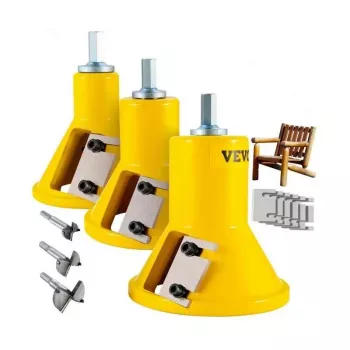
A log tenon cutter kit is built to shape the end of a branch, peeled log, or thick dowel into a round tenon that fits a drilled hole (mortise) or a matching socket. Instead of carving by eye and hoping each part matches the next, the cutter establishes a repeatable diameter so rails, stretchers, and legs seat consistently.
This matters most when a project has many identical joints—chairs, benches, headboards, rustic tables, rail sections, or pergola frames—where small variations can stack up and pull an assembly out of square. Uniform shoulders and diameters help parts pull tight during glue-up, reduce wobble, and typically cut down on “fuss sanding” after the frame is already assembled.
These cutters also work well on rustic species and peeled branches, provided the working end is prepped: the bark is removed, the stock is reasonably straight, and the diameter is centered and close to the cutter’s intended range.
Kit options (4/6/8-piece sets) and common use-cases
Tenon cutter kits are often sold as 4-, 6-, or 8-piece sets. Smaller sets usually cover the most common diameters for indoor furniture and light frames, while larger sets add flexibility for thicker rails and outdoor builds. The practical way to choose is by counting how many tenon sizes your project list actually uses: legs may be one size, stretchers another, and rails a third.
For log furniture, having more than one diameter can also support stepped joinery—thicker tenons for legs and load-bearing members, slimmer tenons for rails and infill—without reworking the design. If you do repairs (replacing a single rung or rail on an older piece), a kit with more size options can reduce the need to alter existing mortises.
Tenon diameter planning guide for common builds
| Project type | Typical tenon range | Notes for fit and strength |
|---|---|---|
| Stools, small side tables | 1″–1-1/4″ | Good for compact joints; prioritize clean shoulders and straight stock. |
| Chairs, benches, bed frames | 1-1/4″–1-1/2″ | Balance strength and drilling ease; consistent diameter improves assembly alignment. |
| Railings, pergolas, outdoor frames | 1-1/2″–2″ | Use sound, dry stock; consider weatherproof glue and mechanical reinforcement. |
Key features to look for in a tenon cutter
Cut quality starts with geometry and blade condition
Sharp cutting edges and stable cutting geometry reduce tear-out and leave a smoother tenon surface, which helps the joint seat fully. Dull edges tend to bruise fibers, create ridges, and encourage you to force the feed—often making the surface worse while raising the risk of a grab or stall.
Housing rigidity and chip clearance
A rigid body helps resist chatter, especially on knotty or uneven grain. Chip clearance matters just as much: good ejection keeps the cutter from clogging, burnishing, or wandering off-center. Resinous species and damp stock can pack chips quickly, so easy clearing is a real time-saver.
Compatibility and serviceability
Before buying, confirm how the cutter is driven (hand drill, drill press, or dedicated driver) and whether adapters are included. Over time, replaceable blades and accessible fasteners make upkeep simpler and extend the tool’s working life—particularly if you cut a mix of green and dry wood.
Setup and safe operation basics
Prepare the stock so the cutter can do its job
Clamp everything—never hand-hold round stock
Align, then feed with control
Personal safety references
Wear eye protection, manage chips, and keep hands clear of rotating parts. General machine-safety practices from OSHA’s woodworking guidance are a helpful baseline: https://www.osha.gov/etools/woodworking.
Getting a snug fit: tolerances, testing, and finishing
For outdoor builds, consider sealing end grain and choosing adhesives and fasteners appropriate for moisture cycling. For a deeper look at how wood behaves as a material—strength, moisture effects, and variability—the USDA Wood Handbook is a solid reference: https://www.fpl.fs.usda.gov/documnts/fplgtr/fpl_gtr190.pdf.
Care, sharpening, and troubleshooting
Product spotlight: Log Tenon Cutter Kit for 1″–2″ tenons
If you’re building rustic furniture or outdoor frames with repeated round joints, the Log Tenon Cutter Kit – 4/6/8pcs Woodworking Tool for 1″-2″ Tenons & Furniture DIY is designed around the most common tenon sizes used for legs, rails, and stretchers. The 1″–2″ range covers everything from compact stools to heavier railings and pergola-style assemblies, and choosing a 4/6/8-piece configuration helps match the tool set to the number of diameters your builds require.
For project planning and shop execution, a simple checklist can help keep setups consistent (workholding, test cuts, and part labeling) before you cut production parts. The downloadable Confidence, Not Ego – Checklist to Understand Confidence vs Ego Explained Simply can be used as a quick “process check” to reduce rushed decisions in the shop—especially when you’re repeating the same joint across many parts.
Quick spec snapshot
| Detail | Value |
|---|---|
| Product | Log Tenon Cutter Kit – 4/6/8pcs Woodworking Tool for 1″-2″ Tenons & Furniture DIY |
| Price | 72.82 USD |
| Availability | In stock |
| Use range | 1″–2″ tenons |
FAQ
How to cut log tenons by hand?
Square the end, mark a shoulder line and target diameter, then rough the shape with a hatchet or knife before refining with a drawknife, spokeshave, and rasp. Test-fit frequently in the mortise, correcting high spots as you go, and finish with light sanding while keeping the shoulder crisp. Clamp the work securely and check roundness from multiple angles to avoid an oval tenon.
Are there alternatives to tenon cutters?
Yes: you can turn tenons on a lathe, use a router with a circle jig, press a dowel plate, or shape by hand with spokeshaves and rasps. Some builders use a hole saw to establish diameter and then clean the shoulder with chisels, or they purchase pre-made dowels and build around standard sizes. The tradeoff is usually speed and repeatability versus tooling you already own.















Leave a comment