Gentle Tech: AI Meditation for Self-Compassion
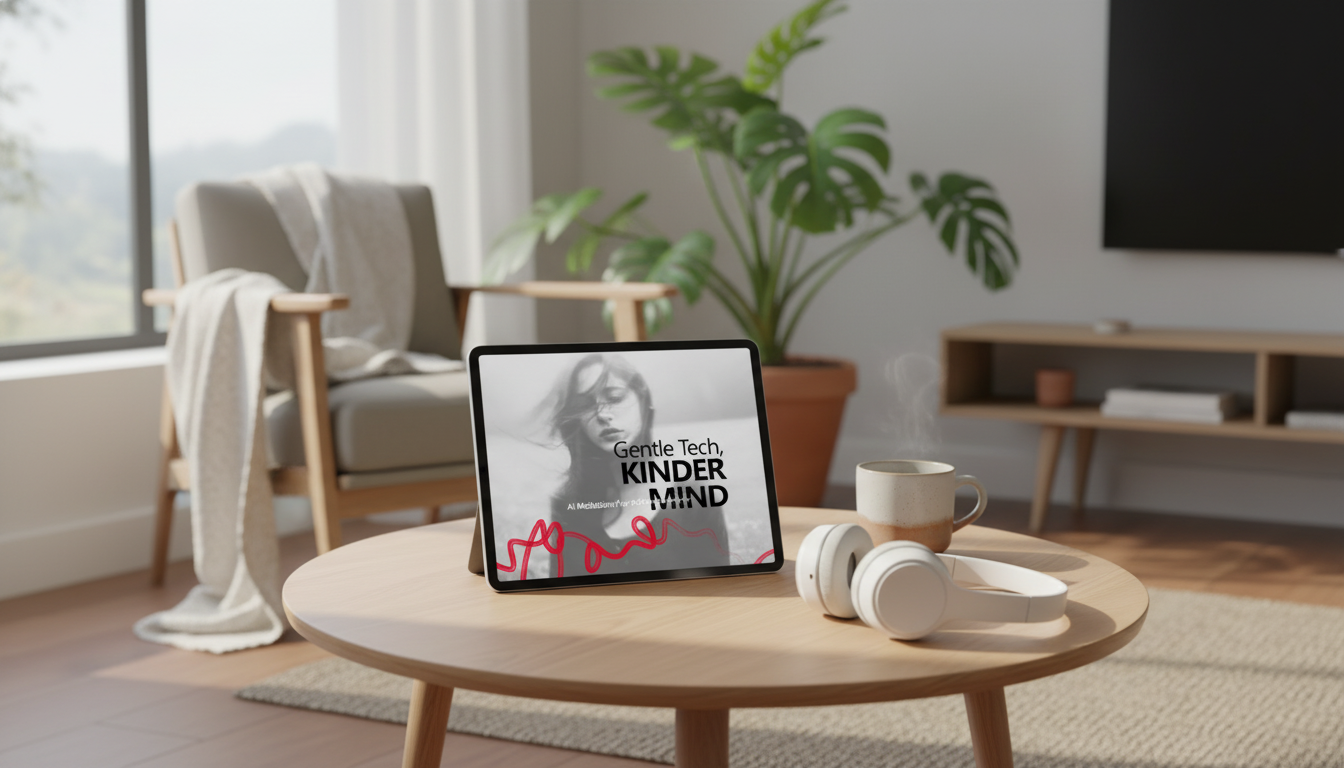
Gentle Tech, Kinder Mind: A Digital AI Meditation Guide for Self-Compassion and Emotional Awareness
Phones and apps can either amplify stress or support steadiness. A “gentle tech” approach treats technology like a calm companion: something that helps you notice what’s happening internally, respond with self-compassion, and build small mindful habits that fit real life. The goal isn’t to track wellness like a scoreboard—it’s to create short, supportive moments that reduce friction, soften self-criticism, and make room for emotional awareness.
Mindfulness research continues to show benefits for stress and wellbeing when practiced consistently and safely. For a deeper overview, see the American Psychological Association’s guide to mindfulness meditation, the NIH NCCIH review on effectiveness and safety, and the Greater Good Science Center’s self-compassion resources.
What “gentle tech” looks like in daily life
Gentle tech is less about having the “best” tools and more about using what you already have with kinder defaults.
- Uses technology to reduce friction for healthy habits rather than to push constant engagement.
- Centers self-kindness: practices are designed to meet difficult moments with warmth instead of self-criticism.
- Prioritizes emotional awareness over optimization: noticing feelings, naming needs, and choosing a supportive next step.
- Builds consistency through micro-practices (1–5 minutes) that fit between tasks, not only in perfect conditions.
- Keeps boundaries: mindful settings for notifications, screen time, and app use so tech supports recovery rather than disrupting it.
Quick reset menu: mindful tech moments by situation
| Situation | 1-minute practice | Self-compassion line | Tech boundary to try |
|---|---|---|---|
| Scrolling without noticing | Pause, exhale slowly 3 times, feel both feet | “It makes sense to seek comfort.” | Move social apps off the home screen |
| Anxious before a task | Hand to chest, name 1 feeling + 1 need | “This is hard, and I’m not alone.” | Turn on Focus mode for 25 minutes |
| Irritable after messages | Unclench jaw, soften shoulders, 10 mindful breaths | “I can respond with care, not urgency.” | Set message check-in windows |
| Late-night overthinking | Body scan from forehead to toes | “Rest is a need, not a reward.” | Charge phone outside the bedroom |
| Self-criticism after a mistake | Notice the inner voice, offer one kind reframe | “I can learn without attacking myself.” | Disable performance/metric widgets for a week |
How an AI meditation guide can support self-compassion
When emotions are loud, decision-making gets harder. An AI-supported meditation guide can offer gentle structure—without turning your inner life into a project.
- Personalization without pressure: choose practices that match your current energy (tired, overwhelmed, numb, activated) rather than forcing a single routine.
- Language that meets the moment: guided scripts can help translate “something’s wrong” into clearer labels (sad, anxious, resentful, lonely) and practical needs (rest, support, boundaries).
- Gentle structure: short sequences—arrive, notice, soothe, choose—reduce decision fatigue when feelings are messy.
- Self-compassion prompts: supportive inner language can interrupt shame spirals and replace them with realistic next steps.
- Consistency aids: repeatable templates and reminders make it easier to practice on ordinary days, not only during crises.
- Supportive—not substitutive: complements therapy, coaching, and medical care; it doesn’t replace professional support when symptoms are severe.
If you want a ready-to-use framework designed around emotional awareness and kindness (rather than performance), explore Gentle Tech, Kinder Mind – AI Meditation Guide for Self Compassion.
A simple practice flow for emotional awareness (2–6 minutes)
This short flow is meant for real life: before a meeting, after a tense text, or during that vague “I can’t focus” feeling.
- Arrive: stop what’s happening for a moment; feel the contact points (feet, seat, hands).
- Name: identify the primary feeling and where it lands in the body (tight chest, heavy throat, buzzing head).
- Normalize: acknowledge that the feeling has a reason—stress, uncertainty, overload, conflict, fatigue.
- Soothe: choose one gentle action (slow breathing, soft gaze, hand to heart, relaxing the shoulders).
- Choose: pick the smallest caring next step (drink water, step outside, write one sentence, send a boundary-setting message).
- Close: offer one self-compassion statement that’s believable (kind but realistic), then return with a softer pace.
Mindful tech boundaries that feel supportive (not restrictive)
What’s included in “Gentle Tech, Kinder Mind”
Gentle Tech, Kinder Mind – AI Meditation Guide for Self Compassion is a digital meditation guide built around self-compassion, emotional awareness, and tech-friendly micro-practices you can use throughout the day. It includes short guided approaches for tough moments (overwhelm, harsh self-talk, emotional numbness), reflection steps that help clarify needs, and a gentle framework for using AI-guided meditations as steady support—without turning wellbeing into another checklist.
At-a-glance product details
| Item | Details |
|---|---|
| Format | Digital guide |
| Focus | Self-compassion, emotional awareness, mindful tech practice |
| Best for | People seeking gentle structure for meditation and reflection |
| Price | 11.99 USD |
| Availability | In stock |
Who it’s for (and who may need something different)
Pairing mindfulness with practical planning
If you want supportive structure for the practical side of life, pair this approach with AI Tools to Organize Your Life Guide – Ultimate Daily Planner Companion. For an extra layer of calm around money decisions, “Save Like a Pro!” – The Ultimate Monthly Savings Checklist can help reduce ambiguity that often fuels background anxiety.
FAQ
Is this guide suitable for beginners who have never meditated?
Yes. It’s built around short, clear steps and micro-practices that don’t require experience, special equipment, or long sessions to get started.
Can AI-guided meditation replace therapy or medical support?
No. It can be a helpful companion for coping skills and reflection, but it isn’t a substitute for professional care—especially if symptoms feel severe, escalating, or unsafe.
How often should the practices be used to notice a difference?
Start with 2–5 minutes most days, focusing on consistency and self-kindness rather than perfection. Timing varies by person, but regular small resets tend to be more effective than occasional long sessions.
















Leave a comment