Tenon Cutters vs Wood Plugs: Uses, Fit, and Finish
What’s the difference between tenon cutters and plugs?
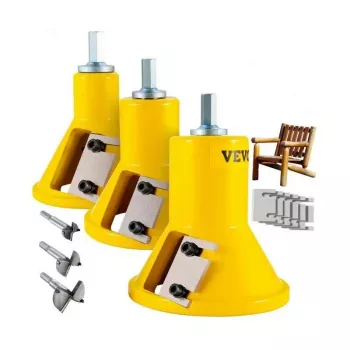
Tenon cutters and plugs solve two different joinery problems. A tenon cutter shapes the end of a round post into a consistent cylindrical “male” tenon so it can fit into a matching hole (mortise). A plug, on the other hand, is a small “cap” of wood used to fill or hide a hole—most commonly a screw pocket, countersink, or visible fastener opening.
Tenon cutters: shaping a precise joint
A tenon cutter is a cutting tool—typically used with a drill—that rounds and sizes the end of a log, dowel, or branch. The goal is strength and alignment: the tenon becomes the structural part of a mortise-and-tenon style connection. This is especially useful in rustic furniture, timber-style builds, and log projects where stock isn’t perfectly milled.
Because fit matters, tenon cutters are sized (such as 1/2 inch) and should be paired with the correct matching drill bit or mortise size. When the tenon is cut cleanly, glue-up is easier, joints seat fully, and the finished piece resists racking and wobble.
Plugs: hiding holes for a finished look
A wood plug isn’t meant to hold two parts together by itself. It’s primarily cosmetic—covering a drilled hole after a screw or bolt is installed, or filling an unused hole in a surface. Plugs can also reduce snag points and help protect hardware from moisture, but their main job is to make the work look cleaner and more intentional.
Plugs are usually cut from matching wood grain (store-bought or made with a plug cutter) and then glued in place and trimmed flush. If the grain is aligned, the patch can be subtle; if it’s contrasted intentionally, it can become a design detail.
Which one do you need?
Choose a tenon cutter when you need a strong round joint between two pieces—like connecting rails to legs, or building frames from logs. Choose plugs when you’re covering holes after fastening or when you want a smoother, more refined surface. If you’re building with logs and want a step-by-step overview of tool sizes, sets, and typical uses, see the main guide here: log tenon cutter kit guide.
FAQ
What size tenon cutter should I use for a 1/2-inch joint?
Use a 1/2-inch tenon cutter and pair it with a matching 1/2-inch mortise hole (or the bit size recommended for that cutter). A test cut on scrap helps confirm the fit before cutting your final parts.















Leave a comment