10-Minute Morning Moves Checklist for Energy and Focus
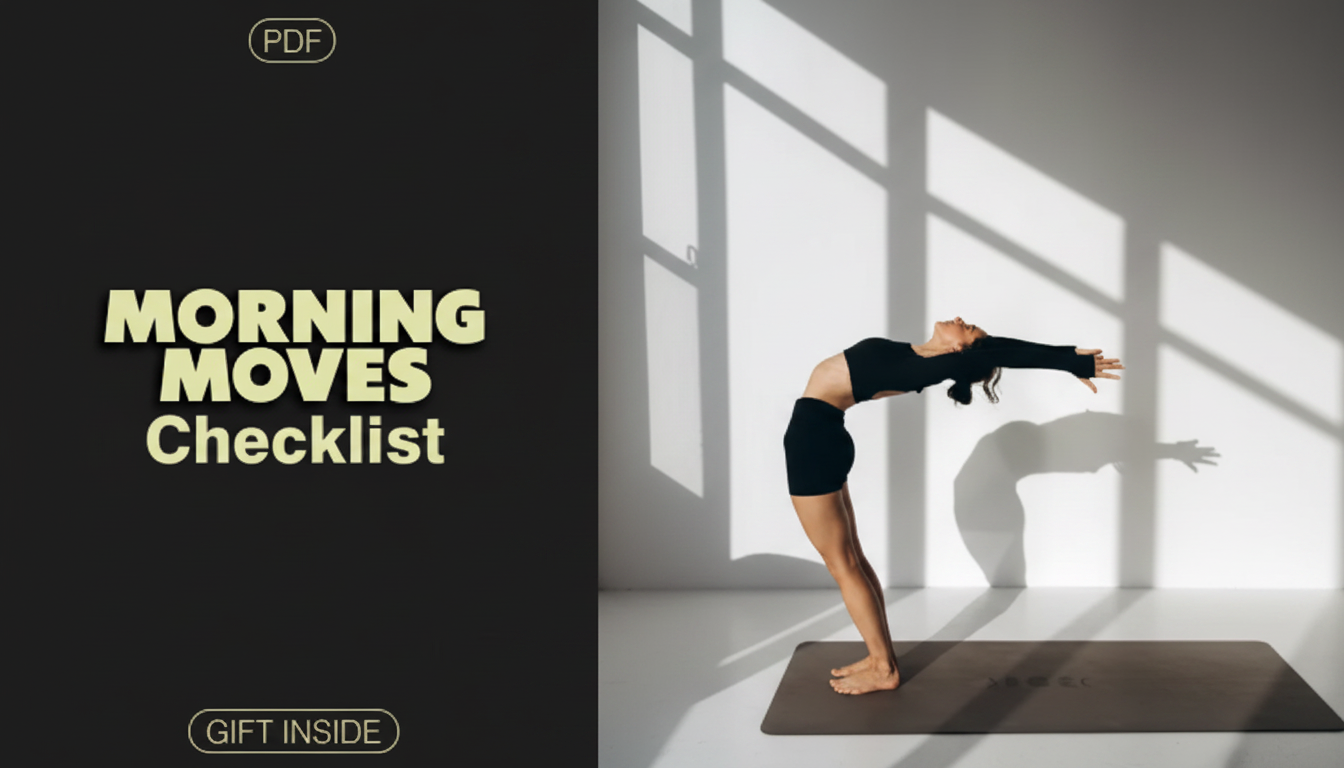
Morning Moves: A 10-Minute Checklist to Wake Up the Body and Sharpen Focus
A short, repeatable morning routine can reduce decision fatigue and make it easier to start the day with momentum. The goal isn’t to “win” the morning—it’s to create a reliable ramp from sleepiness to steady energy. Below is a simple 10-minute sequence that combines breathing, mobility, light strength, and a quick focus reset, plus practical ways to print or save the checklist so it’s ready whenever mornings feel rushed.
Why a 10-minute routine works on busy mornings
When time is tight, a small routine is more likely to happen—and consistency tends to beat intensity for building a habit.
- Keeps the barrier to entry low: Ten minutes feels doable even on packed mornings, making it easier to show up daily.
- Pairs movement with breathing: Gentle motion plus controlled exhales helps transition out of sleep inertia into alertness.
- Checklist format reduces friction: Fewer decisions means less “What should I do next?” stalling.
- Creates a predictable start cue: A consistent opener can improve follow-through on later tasks.
For broader context, adults benefit from regular movement across the week; the CDC’s physical activity guidelines outline weekly targets, while a 10-minute morning flow works well as a daily “starter” that nudges you toward those totals.
The Morning Moves checklist: simple, fast, and repeatable
- Set one goal: Finish the sequence—no perfection required.
- No equipment by default: Add light gear only if it truly saves time (like a pre-laid mat).
- Choose one location: Bedside, hallway, or kitchen—avoid wandering and losing minutes.
- Attach one anchor habit: Drink water, open blinds, or start a playlist to make it automatic.
10-minute routine flow (example)
| Minute | Move | How it helps | Quick cues |
|---|---|---|---|
| 0–1 | Hydrate + posture reset | Signals “day start” and reduces sluggishness | Sip water; stand tall; shoulders down |
| 1–3 | Breathing (box or 4–6 breathing) | Calms stress response; improves control and clarity | Inhale 4, exhale 6; keep jaw relaxed |
| 3–5 | Mobility: neck/shoulders/hips | Loosens stiffness from sleep and sitting | Slow circles; no pain; smooth range |
| 5–7 | Activation: glute bridge + wall push-ups | Wakes up major muscle groups for better energy | 10–15 reps each; steady tempo |
| 7–9 | Light cardio: marching or step-ups | Raises heart rate without draining you | Nasal breathing; stay conversational |
| 9–10 | Focus reset: top-3 list | Turns energy into direction | Write 3 priorities; pick the first action |
If you want a ready-to-use version you can print or keep on your phone, the Morning Moves Checklist for Quick Routines to Jumpstart Focus (digital download) makes the flow easy to follow without thinking.
Choose a routine style that matches the day
The same 10 minutes can feel completely different depending on how you pace it. Adjust the “dial” rather than skipping.
- Low-energy mornings: Extend breathing to 2–3 minutes and keep moves gentle (mobility + easy marching).
- High-stress mornings: Emphasize longer exhales and slower transitions; stress can strongly affect the body’s systems, as explained by the American Psychological Association.
- Training days: Treat this as a warm-up, then move into your main workout later.
- Desk-heavy days: Add extra thoracic rotation and a hip flexor opener to offset sitting.
Sleep quality matters, too—some mornings will feel foggier than others depending on where you woke up in your sleep cycle. Harvard Health Publishing offers a helpful overview of sleep and why it impacts daytime energy.
Quick form cues for common moves (no equipment)
- Neck and shoulder mobility: Move slowly; avoid compressing the neck; keep ribcage stacked over pelvis.
- Hip hinges or good-mornings: Soften knees; push hips back; keep a neutral spine; stop before rounding.
- Glute bridges: Drive through heels; keep ribs down; squeeze glutes at the top for 1 second.
- Wall push-ups: Keep body in one line; elbows about 45 degrees; exhale as you press.
- Marching in place: Tall posture; active arms; gentle foot strike; increase pace only if breathing stays easy.
Make it printable, trackable, and hard to ignore
- Print one sheet and place it where you’ll see it first: Bathroom mirror, fridge, or desk.
- Use a physical checkbox: Pen-and-paper tracking can make completion feel more concrete.
- Create a “minimum viable” version: If you only have 3 minutes, do breathing + one mobility drill + write one priority.
- Try a 7-day streak challenge: Reset without guilt and aim for patterns, not perfection.
To streamline the planning step after the routine, a digital companion can keep your “top 3” consistent day-to-day: AI Tools to Organize Your Life Guide (digital planner companion).
What to do when motivation is low
- Shrink the first step to 30 seconds: Stand up, drink water, and do 3 slow breaths.
- Use an if-then plan: If your mind starts bargaining, then start a timer for 2 minutes only.
- Remove obstacles the night before: Clear floor space, set out a mat, and place the checklist on top.
- Avoid overcorrecting: Skipping one day doesn’t require doubling the routine the next day.
Digital checklist option for a cleaner workflow
FAQ
Is a 10-minute morning routine enough to make a difference?
Yes—especially for consistency and as an energy cue. A short routine can boost alertness and build a foundation for longer sessions later, as long as it’s completed most days.
What if there’s no space or equipment available?
Use wall push-ups, marching in place, gentle mobility, and breathing—each can be done in a small area. Pick 3–4 moves and repeat them in a simple loop.
When is the best time to do it after waking up?
As soon as it’s practical, usually after hydration and a quick bathroom stop. Doing it before checking messages helps protect focus and keeps the routine from getting derailed.
















Leave a comment