Night Driving Safety Checklist: Prep, Adjust, Respond
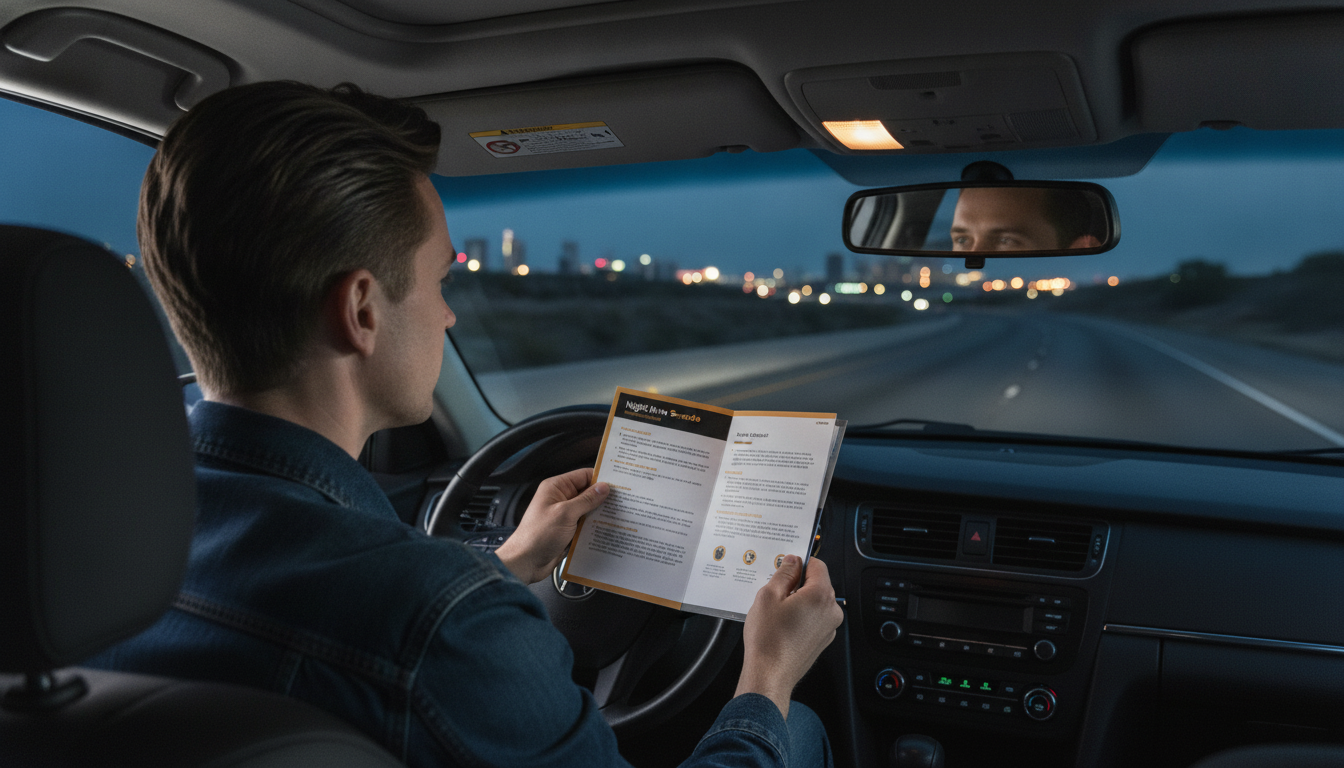
Night Drive Smart: A Practical Night-Driving Safety Checklist You Can Print or Use on Your Phone
Night driving can feel calm and empty—until glare, fatigue, wildlife, or poor visibility turns a normal trip into a high-risk situation. This guide organizes night-driving safety into a simple checklist format: what to prep before leaving, what to adjust once you’re moving, and what to do if visibility drops or something goes wrong. It’s designed to be quick to scan, easy to print, and simple to follow on any drive after dark.
Why night driving needs a different routine
- Visibility shrinks: headlights illuminate only a limited distance, and hazards can appear later than expected.
- Glare increases: oncoming headlights, wet pavement reflections, and dirty glass amplify strain and reduce contrast.
- Reaction time gets squeezed: reduced visual cues can lead to late braking or over-correcting.
- Fatigue and distraction rise: circadian lows, long shifts, and monotony make micro-lapses more likely.
- Wildlife and impaired drivers are more common after dark in many areas.
For a deeper look at nighttime risk factors and visibility, see NHTSA’s night driving guidance and IIHS research on headlight visibility.
Pre-drive checklist: 5 minutes that can prevent a long night
- Clean and clear: wipe windshield (inside and outside), mirrors, backup camera lens, and headlight covers if accessible.
- Lighting check: confirm low beams, high beams, brake lights, turn signals, and hazards work; replace dim bulbs.
- Glass and glare control: top off washer fluid; keep a microfiber cloth in the glovebox for fog/film.
- Tires and traction: quick pressure check; ensure tread is adequate for wet roads and sudden stops.
- Set the cabin: adjust seat and mirrors before moving; set a comfortable temperature to reduce drowsiness.
- Route and timing: choose well-lit routes when possible; build in a break plan for longer drives.
If you want a ready-to-print page you can keep in the glovebox (plus a phone-friendly version), the Night Drive Smart – Night Driving Safety Checklist (Printable Digital Guide) keeps the essentials in one repeatable routine.
Before rolling: visibility and comfort settings that matter
- Aim headlights properly: misalignment shortens usable distance and increases glare for others (get alignment checked if visibility feels uneven).
- Dashboard brightness: dim interior lights to reduce windshield reflections while keeping gauges readable.
- Mirror setup: use the night/auto-dimming feature if available; angle side mirrors to reduce headlight glare.
- Defog readiness: set defrost/defog so it’s one-touch to clear sudden fogging; check A/C function (often helps dehumidify).
- Eyewear choices: avoid tinted lenses at night; keep glasses clean and anti-reflective coating in good condition if applicable.
- Secure the car: remove loose items that could slide and distract; keep essentials within reach (but not in your hands).
On-the-road habits: stay seen, stay calm, stay ahead
- Use low beams appropriately: low beams in traffic, fog, rain, or whenever high beams would glare others; switch to high beams only when safe and legal.
- Increase following distance: add extra space at night to compensate for delayed hazard detection.
- Scan wider, not just farther: check road edges for pedestrians, cyclists, animals, and stalled vehicles.
- Slow down for the beam range: drive at a speed that allows stopping within the illuminated distance ahead.
- Avoid staring into oncoming headlights: look toward the right edge line briefly to maintain lane position.
- Signal early and smoothly: earlier signals give other drivers more time to interpret your movement in low visibility.
- Pass with margin: only pass when fully confident in distance, lighting, and roadway markings.
AAA also highlights practical nighttime habits—especially speed management, clean glass, and smart beam use—here: AAA safety tips for driving at night.
When conditions get worse: rain, fog, glare, and unlit roads
Quick night-driving adjustments by situation
| Situation | What to change | What to avoid |
|---|---|---|
| Oncoming headlight glare | Dim dash, use night mirror mode, look toward right edge line briefly | Staring into headlights or making sudden steering corrections |
| Fog or heavy mist | Low beams/fog lights, slower speed, increased following distance | High beams that reflect and wash out the road |
| Heavy rain | Earlier braking, slower speed, fresh wiper blades and washer fluid | Tailgating or relying on reflections for lane position |
| Unlit rural road | Use high beams when clear, scan edges for wildlife, moderate speed | Outrunning headlights or assuming empty road means safe road |
| Drowsiness signs | Stop for a break, hydrate, switch drivers if possible | “Pushing through” after repeated yawning or drifting |
If something goes wrong: pull-over and emergency steps
Printable checklist format: make it a repeatable routine
For a streamlined print-and-go option, keep Night Drive Smart – Night Driving Safety Checklist | Printable Digital Guide saved on your phone and a copy in the glovebox. And if you like using simple checklists to stay consistent with routines beyond driving, “Save Like a Pro!” – The Ultimate Monthly Savings Checklist (Digital Download) is a similarly quick, repeatable system.
FAQ
Are high beams always safer at night?
No. High beams can improve visibility on dark, empty roads, but they reduce safety when they blind oncoming drivers, reflect in fog/rain, or create glare in traffic—switch to low beams around other vehicles and in reduced-visibility weather.
What’s the best way to handle headlight glare from oncoming traffic?
Use your mirror night mode/auto-dimming, dim the dashboard to cut interior reflections, and keep the windshield clean inside and out. Increase following distance, and briefly reference the right edge line to hold lane position instead of staring at the lights.
How can a driver reduce drowsiness on late-night trips?
Watch for early signs like frequent yawning, heavy eyes, missed exits, or drifting within the lane, then stop before it worsens. Plan breaks, hydrate, keep the cabin comfortably cool, switch drivers when possible, and take a short nap in a safe, legal place rather than trying to “push through.”















Leave a comment