Waste Wise: 4-Stream Home Recycling That Sticks
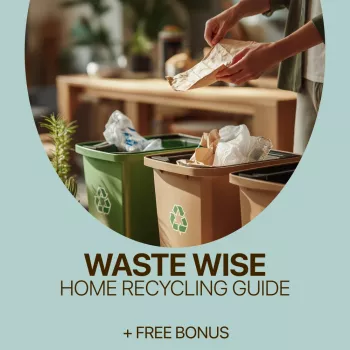
Waste Wise: A Simple Home Recycling System That Finally Sticks
A home recycling setup should feel automatic, not like a daily debate at the trash can. Waste Wise is a practical, room-by-room digital guide designed to turn “Where does this go?” into a simple routine—using clear categories, easy bin labels, and a sorting flow that fits real households (busy mornings included).
Why home waste sorting breaks down (and how to fix it fast)
Most recycling systems don’t fail because you don’t care—they fail because the system asks for too much decision-making, too often. Our team built Waste Wise around the friction points we see in real homes.
- Too many categories too soon: starting with 8–10 bins creates confusion. Begin with a small, stable baseline and expand only when it’s effortless.
- Unclear “maybes”: the hardest items are borderline (rinsed containers, mixed materials, small plastics). A simple decision flow prevents guesswork.
- Bins in the wrong place: sorting fails when the bin isn’t where the waste is created—kitchen prep zone, bathroom, office desk, laundry area.
- No household agreement: one person’s system doesn’t scale unless everyone can follow it in under 3 seconds.
- A working fix: adopt a consistent core set (Landfill, Recycling, Compost, Return/Drop-off), then add one specialty stream at a time.
The Waste Wise home system: a clean 4-stream foundation
The fastest way to reduce mess and second-guessing is to make your “default” streams crystal clear—and keep them consistent from room to room.
- Landfill: true trash that can’t be recovered locally—keeps everything else cleaner and more recyclable.
- Recycling: accepted, clean, and dry materials only; focus on what the local program consistently handles.
- Compost (or food scraps): a simple high-impact stream for many homes; reduces smell and weight in the main bin when handled correctly.
- Return/Drop-off: items that are recyclable but not via curbside (batteries, some plastics, film, bulbs)—collected neatly until a scheduled run.
- The habit that changes everything: sort once at the point of disposal instead of “sorting later” from one big bag.
Four-stream setup at a glance
| Stream | Where it lives | What goes in | Keep it easy with |
|---|---|---|---|
| Landfill | Main kitchen bin + small bathroom bin | Non-recyclable wrappers, heavily soiled items, broken mixed materials | A liner + a clear rule: when in doubt and dirty, landfill |
| Recycling | Next to landfill bin, same height | Clean, dry accepted containers and paper per local rules | A “rinse + dry” habit and a short accepted list on the lid |
| Compost/Food scraps | Counter caddy or under-sink pail | Food scraps and compostables you actually use | A small bin (emptied often) + optional compostable liners |
| Return/Drop-off | Closet tote, garage box, or laundry shelf | Batteries, bulbs, e-waste, film, specialty materials | One tote + a monthly calendar reminder |
Room-by-room placement that makes sorting automatic
Placement beats willpower. When your bins live where waste happens, your brain stops negotiating and starts repeating.
A simple decision flow for common “recycling confusion” moments
Quick calls for common items (check local rules)
| Item | Best default stream | Why this works | If your area differs |
|---|---|---|---|
| Food-soiled paper (e.g., greasy box) | Compost or Landfill | Keeps recycling clean and usable | Compost rules vary—follow local guidance |
| Plastic film and bags | Return/Drop-off | Often tangles sorting equipment | Use store drop-off where available |
| Batteries | Return/Drop-off | Safety + specialized processing | Use local hazardous waste guidance |
| Glass | Recycling (if accepted) | Widely recyclable in many areas | Some areas require drop-off or have restrictions |
| Clothing/textiles | Return/Drop-off (donation/reuse) | Textiles can be reused or recycled | Use local textile recycling or donation options |
Making it stick: labels, routines, and one small weekly reset
What’s included in Waste Wise (digital download) and who it’s for
If you want a home sorting framework that’s simple enough for everyone to follow, start here: Waste Wise: A Home Recycling Guide (digital download). You’ll use it to set up your four-stream foundation, place bins where they’ll actually be used, and keep recycling cleaner by avoiding “wish-cycling.”
If you’re building a broader “home systems” mindset, our team also recommends pairing it with other quick-reference downloads for daily routines, like How to Care for Your Silk (digital download) and Homebody, Hot Body (at-home motivation guide).
For recycling and composting basics and local-program reminders, you can also reference the U.S. Environmental Protection Agency (EPA) recycling guidance, the EPA’s home composting overview, and broader context like the OECD’s Global Plastics Outlook.
Get started today: a 20-minute setup plan
FAQ
What if local recycling rules are different from a general guide?
Use Waste Wise as your home system framework, then customize your Recycling “accepted list” to match your city or hauler’s rules. Keep a Return/Drop-off tote for anything uncertain so you don’t contaminate your curbside recycling.
How many bins are actually necessary to start?
Start with the four-stream foundation: Landfill, Recycling, Compost, and Return/Drop-off. Fewer bins reduce friction, and you can add specialty categories later only if there’s a consistent local outlet.
How do you stop “wish-cycling” without making it complicated?
Keep Recycling to “clean, dry, accepted” items only, and route anything questionable to Return/Drop-off. A quick reference label on the recycling lid plus a simple weekly reset prevents confusion from piling up.















Leave a comment