Bedroom Design Ideas for Every Style + Planning Checklist
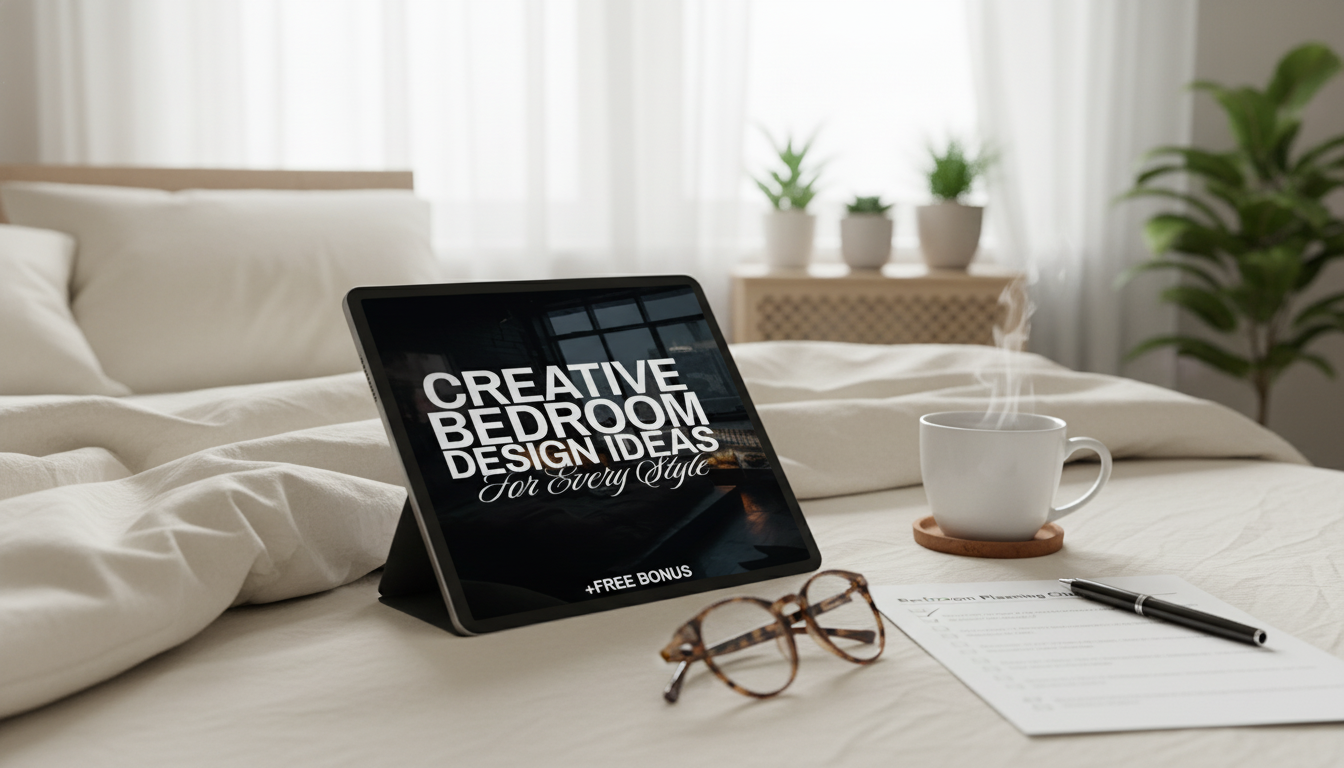
Creative Bedroom Design Ideas for Every Style: A Practical Guide with Checklist
A bedroom feels “finished” when the layout supports daily routines, the palette stays calm, and the details add personality without turning into clutter. The most reliable approach is to work in layers: start with function, choose a style direction, build a simple color plan, add lighting that flatters the room, then bring in textiles and edited decor. If you want a step-by-step plan you can follow from first decision to final styling, the Creative Bedroom Design Ideas for Every Style | Interior Design Ideas Bedroom eBook | Digital Download Home Decor Guide & Checklist organizes those choices in one place.
Start with function: layout choices that make the room feel bigger
Before picking a headboard or paint color, define the room’s primary job: sleep-first, work-from-bedroom, shared space, guest room, or a multi-use studio corner. Once the main purpose is clear, the room can be arranged to reduce friction in daily routines.
- Place the bed for comfort and flow: prioritize a clear walkway on both sides when possible, and avoid blocking doors, closet access, and HVAC vents.
- Create “zones” instead of adding furniture: sleeping zone (bed + nightstands), dressing zone (dresser/closet + mirror), and a small reading/work zone if space allows.
- Scale furniture to the room: choose slimmer nightstands, wall-mounted lights, and a low-profile bed frame in smaller bedrooms.
- Add storage where it disappears: under-bed drawers, an ottoman bench, headboard shelving, closet organizers, and matching baskets to keep surfaces clear.
Quick layout fixes by room challenge
| Room challenge | Simple change | Why it helps |
|---|---|---|
| Narrow bedroom | Swap to wall sconces + floating nightstands | Clears floor space and widens the visual path |
| Small bedroom | Choose a low bed + large rug | Makes ceilings feel higher and anchors the room |
| Awkward closet access | Shift bed 6–12 inches and use a slimmer nightstand | Improves daily flow without a full redesign |
| Cluttered surfaces | Add a tray system + one catch-all basket | Creates intentional “homes” for daily items |
| No space for seating | Use an upholstered storage bench at the bed | Adds function without crowding corners |
Choose a style direction without locking into one look
A cohesive bedroom doesn’t require matching sets. It needs a clear direction and a few repeating cues that tie the room together.
- Pick 3 style words to guide decisions (examples: “warm, airy, modern” or “moody, vintage, cozy”).
- Select one signature element that signals the style: a headboard shape, a lighting finish, a wallpaper moment, or a statement art piece.
- Mix old and new intentionally: keep finishes consistent (all warm metals or all cool metals) while varying textures for depth.
- Use repetition for cohesion: repeat one curve shape, one wood tone, or a black accent in 3–5 places across the room.
If decision fatigue kicks in, a simple framework can help keep purchases intentional. A small planning tool like Confidence, Not Ego – Checklist to Understand Confidence vs Ego Explained Simply can be useful for staying grounded while making big visual choices (especially when trends are tempting).
Color made easy: calming palettes and the 60/30/10 approach
Start by choosing the base mood: light and bright, warm and earthy, cool and serene, or dark and dramatic. Then use the 60/30/10 approach to keep the room balanced: 60% dominant color (walls/large rug/duvet), 30% secondary (curtains, bedding layers, accent chair), and 10% accents (art, pillows, decor objects).
- Keep undertones consistent: pair warm whites with warm woods; pair cool whites with gray or ash woods.
- Use contrast strategically: dark nightstands in a light room, or a light rug in a darker room, helps define the bed zone.
- Limit bold patterns: choose one major patterned surface (bedding OR rug OR wallpaper) to avoid visual noise.
Palette recipes for common bedroom styles
| Style | Dominant (60%) | Secondary (30%) | Accent (10%) |
|---|---|---|---|
| Modern minimal | Warm white | Light oak + stone gray | Matte black |
| Cozy boho | Cream | Terracotta + natural rattan | Olive green |
| Scandinavian | Soft white | Pale wood + cool gray | Dusty blue |
| Classic traditional | Soft beige | Walnut + crisp white | Brass |
| Moody contemporary | Charcoal | Deep taupe + blackened wood | Amber/cognac |
Lighting layers that flatter the room (and help sleep)
Lighting is one of the fastest ways to make a bedroom feel calmer and more “designed.” For both comfort and function, aim for three layers: ambient (ceiling fixture), task (reading lamps or sconces), and accent (soft glow from a lamp or diffused LED strip).
For more guidance on building layered lighting, the American Lighting Association is a helpful reference for lighting basics and fixture selection.
Textiles and texture: the fastest way to upgrade comfort
For sleep-supportive room guidelines (including light and environment considerations), the Sleep Foundation offers practical recommendations.
Style-by-style bedroom ideas (pick one and personalize)
A practical checklist to avoid common design mistakes
Downloadable guide and checklist for planning the room
A digital guide keeps decisions organized—layout, palette, lighting, textiles, and finishing touches—so the room comes together without costly do-overs. The Creative Bedroom Design Ideas for Every Style eBook (digital download) pairs inspiration with a practical checklist that follows a clear order: measure → pick style words → choose palette → select key furniture → layer lighting → add textiles → edit decor.
FAQ
What is the 60 30 10 rule for bedroom design?
It’s a simple way to balance color: 60% dominant color for big areas (walls, main bedding, large rug), 30% secondary color for supporting pieces (curtains, furniture, layered textiles), and 10% accents (pillows, art, decor). It helps a bedroom feel cohesive without becoming monotonous.
What are the easiest bedroom upgrades that don’t require remodeling?
Swap in layered bedding, use a larger rug that frames the bed, and switch to warmer bulbs with dimmers for a softer nighttime feel. Adding curtains hung higher, matching bedside lighting, and simplifying nightstand clutter can make the room feel finished quickly.












Leave a comment