Castle Bed Benefits for Kids: Space, Storage, and Fun
What are the benefits of a castle bed?
A castle bed adds more than a fun theme to a child’s room—it can make the space work harder, feel cozier, and stay more organized. Whether it’s a lofted “castle” design or a bunk-style castle bed, the biggest advantages come from combining sleep, storage, and play into one footprint.
Creates a room they’re excited to use
Castle styling turns a regular bedtime setup into something kids actually look forward to. The playful design can help ease bedtime resistance and makes the bedroom feel like their own special space, not just a place to sleep.
Maximizes floor space
Many castle beds are built as loft beds or bunk beds, which frees up valuable floor area. That extra room can become a reading nook, a play zone, or simply make a smaller bedroom feel less crowded.
Often includes built-in storage
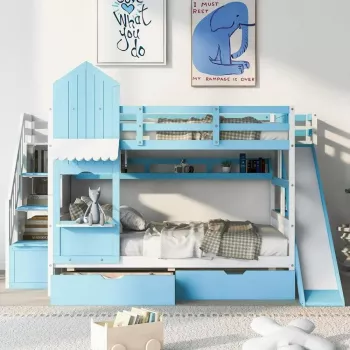
Castle beds frequently integrate drawers, shelves, or cubbies into the stairs or bed frame. That means fewer bulky dressers and more places to keep pajamas, toys, books, and extra bedding within easy reach—especially helpful in shared bedrooms.
Safer access with stairs (and sometimes guardrails)
Compared with ladder-only designs, castle beds that use stairs can feel more secure for kids going up and down. Many models also feature tall guardrails on the upper sleeping area, which can provide added peace of mind for parents.
Great for siblings and sleepovers
Castle-themed bunk configurations can comfortably sleep two (or more, depending on the design), making them a smart option for shared rooms. They also make hosting friends easier without needing a separate guest bed.
Can include fun extras like slides
Some castle beds incorporate slides for an extra element of play. While not essential, features like this can make the bed a centerpiece of the room and add more value to the overall setup.
For a closer look at a castle full-over-full bunk bed with slide, stairs, and storage—and what to consider before buying—visit this detailed castle bed guide.
FAQ
What should you look for when buying a castle bunk bed?
Prioritize sturdy construction, secure guardrails, and a safe stair design, then confirm the room’s ceiling height and the bed’s overall footprint. Storage features and mattress compatibility are also key for day-to-day usability.











Leave a comment