5–7 Minute Mini Circuit Checklist for Energy and Focus
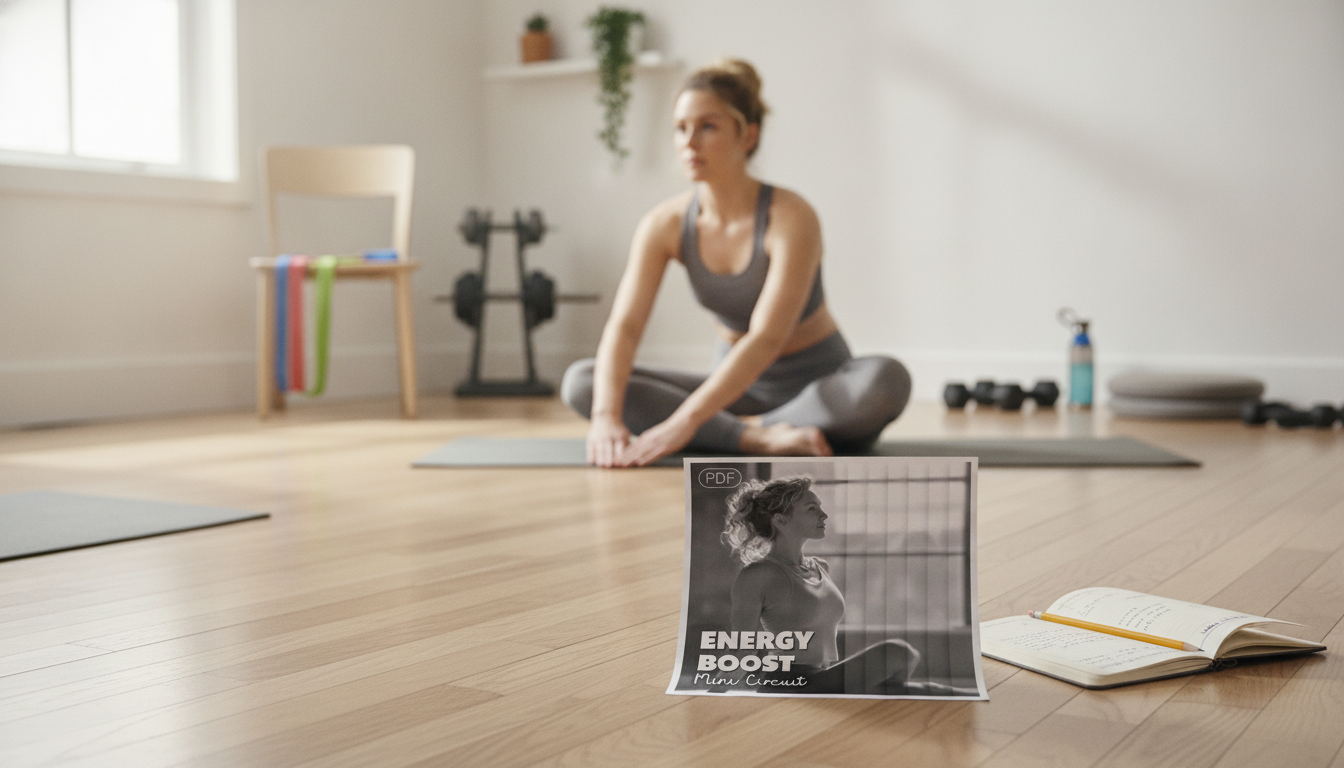
Quick Energy Boost Mini Circuits: A 5–7 Minute Checklist for Instant Motivation and Focus
When energy dips and focus slips, a short, structured movement break can help reset attention and elevate mood. This mini-circuit checklist uses simple, equipment-free moves that fit into a 5–7 minute window at home—ideal between meetings, study blocks, or afternoon slumps.
What a “mini circuit” is—and why it can feel energizing fast
A mini circuit is a timed sequence of 3–6 movements performed back-to-back with minimal rest. Because you keep moving (without turning it into a full workout), the body warms up quickly and blood flow increases—two simple shifts that can reduce that “stuck” or groggy feeling.
Another reason mini circuits work well during busy days: the checklist approach reduces decision fatigue. Instead of debating what to do, you start the timer, follow the plan, finish, and return to work. Keep the effort brisk but controlled—enough to feel awake, not so intense that you need a shower and a nap.
For general guidance on weekly activity targets and how movement supports health, see the CDC’s Physical Activity Basics and the ACSM Physical Activity Guidelines.
Before starting: 30-second readiness check
- Space: Clear an area about the size of a yoga mat. Wear stable shoes or go barefoot on a non-slip surface.
- Breathing: Take 3 deep nasal inhales and long exhales to drop tension before you speed up.
- Posture cue: Stack ribs over pelvis, relax shoulders down and back, and tuck the chin slightly.
- Safety: Stop if you feel sharp pain, dizziness, or unusual shortness of breath.
The 5–7 minute quick energy boost circuit checklist (no equipment)
- Set a timer: 30 seconds work / 10 seconds transition (repeat for 2 rounds).
- Pick 5 moves from the menu below; keep transitions simple so momentum stays high.
- Effort target: Steady breathing, with the last 5 seconds of each interval feeling challenging but doable.
- Downshift: Finish with 20–40 seconds of slow marching and one extra-long exhale per breath.
Mini Circuit Menu (pick 5 for a fast routine)
| Move | How to do it (quick cue) | Energy focus | Easier option |
|---|---|---|---|
| March + arm drive | Knees up, elbows back, tall spine | Warm-up + alertness | Smaller steps, slower arms |
| Bodyweight squat | Hips back, knees track over toes, stand tall | Leg power + circulation | Chair sit-to-stand |
| Incline push-up | Hands on counter/wall, body straight, controlled reps | Upper-body activation | Wall push-up |
| Fast feet (in place) | Light taps, soft knees, quick rhythm | Nervous system “wake-up” | Step side-to-side |
| Reverse lunge | Step back, drop straight down, drive up | Glutes + posture | Shorter range of motion |
| Glute bridge | Heels down, squeeze glutes, pause at top | Hip opener + low-back friendly | Hold bridge isometric |
| Plank shoulder taps | Wide feet, tap opposite shoulder, minimize sway | Core + focus | Knee plank taps |
| Standing T-spine reach | Rotate and reach gently, ribs down | Mobility + breathing | Smaller rotation |
Two ready-to-go routines (choose based on how you feel)
Routine A (sluggish, low motivation)
March + arm drive → Fast feet → Squat → Incline push-up → Standing rotation. Keep transitions crisp and let the heart rate climb a bit to shake off the “sleepy” feeling.
Routine B (stressed, scattered)
March (slower) → Glute bridge → Reverse lunge (slow) → Plank shoulder taps (controlled) → Standing rotation + longer exhales. Aim for smooth reps and quiet landings—more “reset” than “race.”
Use two rounds for a true 7-minute reboot. If time is tight, do one round (about 3–4 minutes) and still finish with a short downshift.
Form and pacing cues that improve focus (not just sweat)
- Match breath to movement: Exhale on effort—standing up from a squat, pushing the floor away, or driving the knee up.
- Pick one anchor cue: Examples: “tall spine,” “quiet feet,” or “slow shoulders.” Keep returning to it when your mind wanders.
- Stay smooth: Consistent tempo often feels more mentally refreshing than all-out speed.
- Scale without stopping: If your heart rate spikes too high, keep moving but reduce range of motion for 20–30 seconds.
For more on the connection between movement and stress relief, the Mayo Clinic’s overview of exercise and stress is a helpful reference.
How to build the habit in a busy day
- Trigger it: Do your mini circuit after a predictable event—first email block, lunch, school pickup, or mid-afternoon.
- Keep it visible: A printed checklist on the desk or saved to your phone lock screen reduces friction.
- Track consistency, not intensity: Check off “done” even if you chose low-impact swaps or moved at a gentler pace.
- Pair it with a 60-second reset: Drink water, open a window, or step into daylight after finishing.
Printable checklist option
- Quick Energy Boost Mini Circuit Checklist (5–7 minute routine) — a simple pick-and-go layout designed for fast breaks between tasks.
- AI Tools to Organize Your Life Guide — useful if you want a system for scheduling micro-breaks, batching tasks, and keeping routines consistent.
- “Save Like a Pro!” Monthly Savings Checklist — a practical companion if your “reset routine” includes reducing money stress alongside movement and planning.
FAQ
How intense should a 5–7 minute mini circuit be to feel energized?
Aim for moderate-to-vigorous but controlled effort: you should be breathing faster, but still able to speak a short sentence. The last few seconds of each interval should feel challenging without pushing into all-out exhaustion that can lead to a crash.
Can these mini circuits be done every day?
For most people, yes—because the volume is short. Rotate emphasis (legs, core, mobility) and scale intensity as needed, and seek medical clearance if you have conditions that limit exercise.
What if jumping or fast moves bother knees or neighbors downstairs?
Use low-impact swaps like marching, step side-to-side, wall or incline push-ups, and chair sit-to-stands, and focus on “quiet feet.” Slowing the tempo while keeping steady movement still delivers a noticeable focus boost.















Leave a comment