60-Minute Night Routine for Clear Skin & Deep Sleep
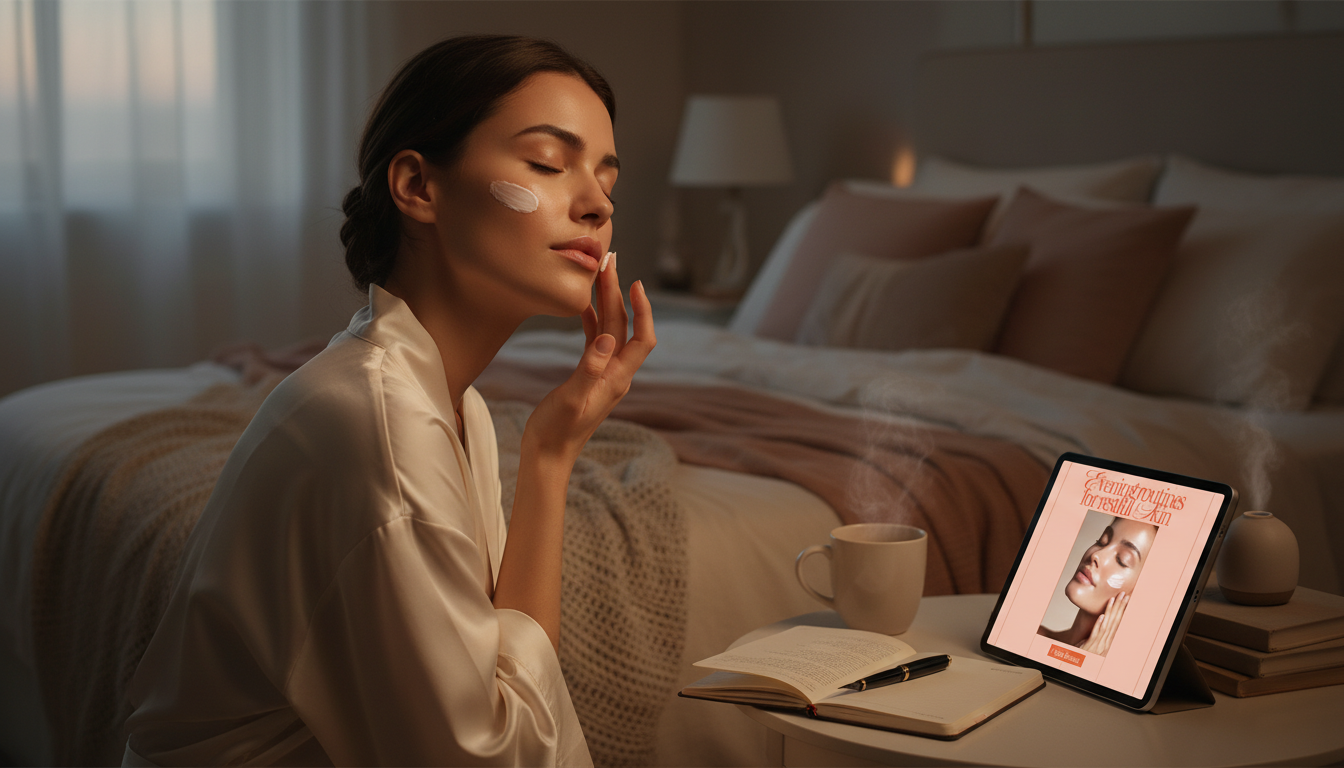
A Calming Evening Routine for Clearer Skin and Deeper Sleep
An evening routine can do double duty: support skin repair overnight and cue the nervous system to shift into deeper rest. The key is a simple, repeatable nighttime flow that works even on busy nights—light, temperature, a few calming rituals, and a barrier-friendly skincare routine you can stick with.
Why evenings matter for skin recovery and sleep depth
Nighttime is when skin leans harder into repair work—recovering its barrier, rebalancing moisture, and calming the visible impact of the day. Stress, dehydration, and “one more episode” habits can interfere, leaving skin looking dull or feeling tight the next morning.
Sleep timing and consistency also shape circadian rhythm cues. Light exposure, meal timing, and bedroom temperature influence how quickly you fall asleep and how steady sleep stays—often showing up as puffiness, redness, or a worn-out look.
A predictable wind-down reduces cognitive arousal (the mental “revving” that keeps you scrolling or overthinking). Less arousal usually means faster sleep onset and fewer wake-ups—benefits that tend to translate into calmer-looking skin by morning.
The 60-minute wind-down: a practical sequence that works on busy nights
This routine is designed to be flexible: choose one option per time block. If you’re running late, keep the order but shorten the steps—environment first, then skin, then one calming cue.
| Time | Skin step | Sleep step | Keep it simple |
|---|---|---|---|
| 60–45 min | Remove makeup/sunscreen with a gentle cleanser | Dim lights; stop intense content | One environment change beats five apps |
| 45–30 min | Hydrating serum or essence; moisturizer | Set bedroom to cool and dark | Prepare tomorrow’s outfit to reduce mental load |
| 30–15 min | Targeted treatment (as tolerated): niacinamide/retinoid/acid on alternating nights | Breathing: 4-7-8 or box breathing | Skip actives if skin feels irritated |
| 15–0 min | Lip balm; optional occlusive on dry spots | Read a few pages or listen to a calm track | Same end cue nightly trains the brain |
If screen use is non-negotiable, reduce brightness and shift to warmer color settings. Blue-leaning light can make it harder to feel sleepy at bedtime, especially in the last hour of the day (see Harvard Health Publishing’s overview on blue light and sleep).
Nighttime skincare basics: cleanse, hydrate, protect the barrier
1) Cleanse without stripping
Choose a low-foam, fragrance-light cleanser when possible. If you wear heavy sunscreen or makeup, double cleansing can help—first to dissolve product buildup, then to cleanse skin—without resorting to harsh scrubs or over-washing. For foundational guidance, the American Academy of Dermatology’s skin care basics is a solid reference.
2) Layer hydration, then seal it in
Hydration often works best in layers: a humectant (like glycerin or hyaluronic acid) under a moisturizer can reduce tightness and morning dryness. Apply to slightly damp skin if your products tolerate it, then moisturize to slow overnight water loss.
3) Support the barrier consistently
Look for barrier-supporting ingredients such as ceramides, cholesterol, and fatty acids. These can help reduce irritation and sensitivity over time—especially if weather, indoor heat, or frequent cleansing leaves skin feeling reactive.
4) Be conservative with actives
Retinoids, exfoliating acids, and acne treatments can be helpful, but overuse commonly leads to redness or stinging—exactly the sensations that make it harder to relax. If skin feels “hot,” tight, or flaky, trade an active night for a recovery night.
Sleep ritual upgrades that show up on the face
Light: make evenings dim, make mornings bright
In the last hour before bed, swap overhead lighting for warm lamps. In the morning, get outside light early when you can; that daytime cue often helps melatonin arrive earlier at night.
Temperature: cool room, warm-to-cool transition
A slightly cooler bedroom supports sleep for many people. A warm shower followed by a cool room can help your body downshift, making it easier to drift off.
Caffeine and alcohol: watch the “hidden” disruptors
Late caffeine can delay sleep even if you feel tired. Alcohol may make you drowsy at first, but it commonly increases nighttime awakenings and can contribute to next-day puffiness. If you want a clear baseline, keep both earlier in the day for a week and observe changes.
Pillowcase, hair, and friction
Stress offloading in 2 minutes
A weekly rhythm: rotate treatments and recovery nights
Personalize the routine with an AI-enhanced evening plan
For a structured, downloadable framework, see Evening Routines for Restful Skin and Deep Sleep – Nighttime Skincare & Sleep Ritual Guide. It’s built around checklists, time blocks, and flexible options (recovery vs active nights) so consistency doesn’t depend on willpower.
If stress is the main thing keeping you wired at bedtime, pairing the routine with a quick mindset tool can help you stop “performing relaxation.” The Confidence, Not Ego – Checklist to Understand Confidence vs Ego can be used as a short self-check that reduces spiraling and supports a calmer wind-down.
Common mistakes that sabotage both skin and sleep
Download: Evening Routines for Restful Skin and Deep Sleep
For a ready-to-use combined skincare + sleep ritual flow, the Evening Routines for Restful Skin and Deep Sleep – Nighttime Skincare & Sleep Ritual Guide is designed for fast implementation: a core nightly routine plus flexible options for active nights, recovery nights, and low-motivation evenings. It’s a practical way to build consistency with a repeatable framework.
For sleep duration targets, most adults do best with 7–9 hours per night (National Sleep Foundation: How much sleep do we really need?).
FAQ
What is the best sleep schedule for skin?
A consistent bedtime and wake time most days tends to support circadian rhythm and visible skin recovery, with most adults aiming for 7–9 hours. If you’re shifting your schedule, move gradually in 15–30 minute steps to make it easier to maintain.
















Leave a comment