AI Trip Outfit Planner: Capsule Packing for Easy Style
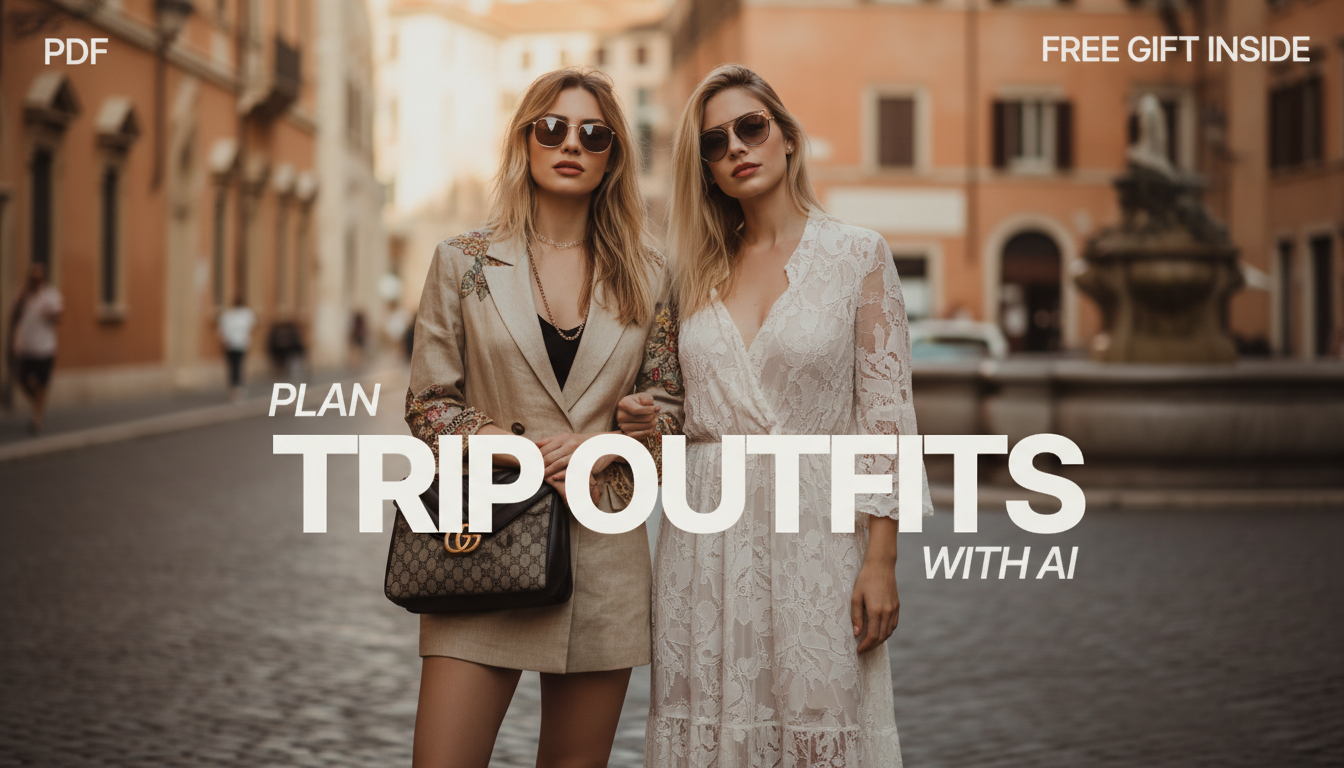
Planning Trip Outfits with AI: Smart Packing for Capsule Wardrobes and Stress-Free Travel Style
Trip outfit planning gets complicated fast: changing weather, mixed activities, limited luggage space, and the pressure to look put-together in photos. Using AI as a planning partner can streamline decisions by turning a rough itinerary, destination climate, and your closet basics into a simple capsule wardrobe and a day-by-day outfit map. The goal is fewer items, more combinations, and less last-minute shopping—without sacrificing personal style.
Start with a clear trip brief (the inputs that make AI useful)
AI works best when it has specific, practical details—think of it like giving a stylist your itinerary and your luggage rules. Before you plan outfits, gather the essentials in one note so your decisions stay consistent.
- Collect the non-negotiables: destination(s), trip length, dress codes, and special events (nice dinner, hike, business meeting).
- Add constraints: carry-on only vs checked bag, laundry access, comfort needs, and footwear limits (for many travelers, shoes are the real “space hog”).
- Pull a quick weather snapshot: typical highs/lows, rain probability, and wind (especially for coastal cities). For U.S. destinations, the National Weather Service is a dependable starting point.
- Define your style lane in plain words: 3–5 descriptors (minimalist, sporty, polished, romantic) plus 2–3 colors you want to repeat.
One small detail that pays off: add your “no” list. If you hate stiff denim on flights, blister-prone heels, or sweaters that itch, write it down up front so your plan doesn’t fall apart mid-trip.
Build a travel capsule wardrobe with AI (repeatable, not random)
A travel capsule is a small set of items that mix together easily. Instead of packing “outfits,” you pack pieces that build outfits. AI helps by turning your brief into counts, formulas, and combinations you might not think of on your own.
- Ask for a capsule based on your brief: number of tops/bottoms/layers/shoes, plus a simple “formula” (base + layer + shoe).
- Prioritize remixable pieces: neutral bottoms, tops that can dress up/down, and one statement layer that changes the look.
- Use a tight color palette: repeating colors multiplies combinations and reduces “nothing matches” overpacking.
- Plan around your most versatile shoes first: choose the main walking shoe, then fit clothing to those shoes (not the other way around).
- Include one buffer outfit: for spills, surprise plans, or a weather shift.
Simple 5-Day Capsule Blueprint (Carry-On Friendly)
| Category | Recommended Count | Notes for Better Mixing |
|---|---|---|
| Tops | 4–5 | Mix of casual + one elevated top; aim for interchangeable necklines/sleeves |
| Bottoms | 2–3 | One casual (jeans/shorts), one polished (trouser/skirt), optional second casual |
| Dress/One-piece | 0–1 | Optional quick outfit; can double as dinner look |
| Layers | 2 | Light jacket + mid-layer (cardigan/overshirt) for temperature swings |
| Shoes | 2 | Primary walking shoe + one nicer or weather-specific pair |
| Accessories | 3–5 | Small items that change outfits: scarf, belt, jewelry, hat |
| Active/Swim | As needed | Only if itinerary requires; choose pieces that can double (top as base layer) |
Turn the capsule into a day-by-day outfit map
The capsule is your inventory; the outfit map is your schedule. This is where planning gets noticeably calmer—especially when mornings are early and you’d rather not “re-decide” everything.
For long travel days, aim for one outfit that can handle airport A/C, luggage lifting, and sitting for hours without wrinkling badly. If you’re flying, it also helps to keep a quick reference for carry-on rules via TSA’s “What Can I Bring?” list, especially for toiletries and accessories.
Pack smarter: weight, wrinkles, and real-life comfort
Health prep matters too—especially for international travel. Check destination-specific updates on CDC Travelers’ Health so you’re not scrambling for last-minute requirements that affect what you pack (like masks, medications, or documentation).
Use AI to shop less (and only fill true gaps)
A practical shortcut: a guided system for AI-based outfit planning
- For a step-by-step system, see Planning Trip Outfits with AI – How to Plan Outfits for Trips with AI | Smart Packing, Capsule Wardrobes & Stress-Free Travel Style eBook.
- If your trip includes riding days and you need clothing that works on and off the bike, pair it with Bicycle Touring Tips – The Ultimate Bicycle Touring Tips Guide for Planning, Packing & Riding with Confidence to stay comfortable without overpacking.
- For travelers who want to feel more confident in photos and social settings (without overthinking), Confidence, Not Ego – Checklist to Understand Confidence vs Ego Explained Simply can be a quick mindset add-on alongside practical outfit planning.
FAQ
What information should be provided to AI to plan trip outfits accurately?
Provide destination(s), dates, typical weather range, itinerary activities, dress codes, luggage limits, laundry access, your preferred color palette, and any comfort constraints (shoes, fabrics, temperature sensitivity). The more specific the constraints, the more realistic the outfit plan will be.
How many outfits should be packed for a 5–7 day trip?
A simple capsule usually covers it: 2–3 bottoms, 4–5 tops, 2 layers, and 2 pairs of shoes, plus one buffer outfit. If you’ll have laundry access, you can pack fewer items and re-wear your most versatile pieces.
How can overpacking be avoided while still having variety?
Limit your color palette, use a repeatable outfit formula, and rely on accessories and layers to change the look. Enforce a “3-outfit rule” so every item you pack works in at least three planned combinations.











Leave a comment