Beginner Home Strength Plan: 3 Days to Real Power
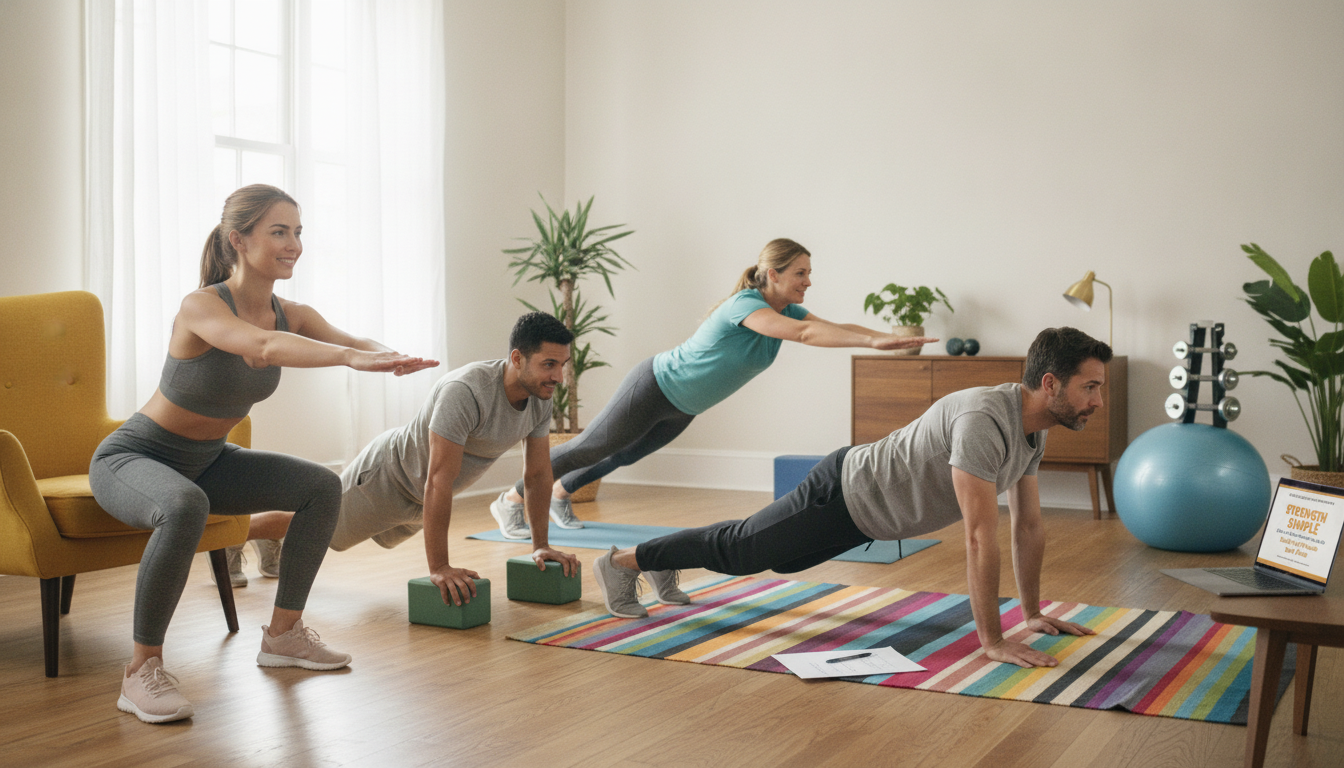
Strength Made Simple: A Beginner-Friendly Home Workout Guide to Build Real Power
Building strength at home can be straightforward with a small set of reliable movements, a simple weekly structure, and a checklist to stay consistent. This guide lays out beginner-friendly bodyweight exercises, easy progression options, and a practical plan that fits busy schedules—no gym required.
For health guidelines and a helpful “big picture” view, the CDC’s Physical Activity Guidelines and the American College of Sports Medicine (ACSM) resistance training resources are solid references for beginners.
What “strength” looks like for beginners
Strength is the ability to produce force through common patterns: push, pull, squat, hinge, carry, and core stabilization. When those patterns get smoother and more controlled, everyday tasks feel easier—standing up, carrying groceries, climbing stairs, or moving furniture.
Early progress comes from learning form, building consistency, and gradually increasing challenge—not from exhausting workouts. A simple way to measure improvement is seeing more controlled reps, better range of motion, shorter rest, or a harder variation using the same exercise pattern.
Warm-up that takes 5 minutes and actually helps
A quick warm-up should make the first working set feel better, not leave you tired. Keep it simple:
- Breathing + posture reset (30–45 seconds): slow nasal breaths, ribs down, tall spine.
- Joint prep (2 minutes): arm circles, hip circles, ankle rocks, gentle spinal rotations.
- Movement rehearsal (2 minutes): 5–8 easy reps of the first two exercises (for example, assisted squats and incline push-ups).
Goal: feel warmer and more mobile without fatigue; the warm-up should make the first set feel smoother.
The 6 core bodyweight patterns (and beginner variations)
1) Squat pattern
Build leg strength and knee/hip control.
- Chair/box squat → bodyweight squat → tempo squat (3 seconds down)
2) Hinge pattern
Train glutes and hamstrings while learning a “hips back” movement.
- Hip hinge drill → glute bridge → single-leg glute bridge
3) Push pattern
Develop pressing strength for chest, shoulders, and triceps.
- Wall push-up → incline push-up (hands on counter/bench) → knee push-up → standard push-up
4) Pull pattern (at home options)
Pulling balances pushing and can help keep shoulders happier over time. Choose a safe option.
- Towel rows in a sturdy door setup (only if safe) → backpack row (light load) → slower reps and pauses
5) Core stabilization
Think “resist movement” more than “do sit-ups.” You’re training bracing and control.
- Dead bug → plank on knees → plank → side plank
6) Carry/grip (home-friendly)
Carrying teaches full-body tension and posture.
- Suitcase carry with a loaded backpack or grocery bag; focus on tall posture and slow steps
A simple 3-day beginner plan (20–30 minutes per session)
Train on non-consecutive days (example: Mon/Wed/Fri) to allow recovery while building the habit. Keep 1–3 reps “in reserve” on most sets so form stays crisp and controlled. Rest 60–120 seconds between sets; longer rest is fine if breathing stays high. Optional: add a 10-minute walk on off days for recovery and routine.
| Day | Exercises | Sets x Reps | Notes |
|---|---|---|---|
| Day A | Chair/box squats; incline push-ups; glute bridges; dead bug | 2–3 x 6–10 each | Start easy; increase reps before making it harder |
| Day B | Split squat (assisted); backpack row; plank; suitcase carry | 2–3 x 6–10; planks 15–30s; carries 30–60s | Move slowly; stop before form breaks |
| Day C | Bodyweight squat or tempo squat; knee push-ups; hip hinge drill or glute bridge; side plank | 2–3 x 6–10; side plank 10–25s/side | Pick variations that feel challenging but doable |
How to progress without guessing
Use the “2-for-2” rule: if the top end of the rep range is reached for all sets in two sessions, progress next time. Progression options (choose one at a time) include adding 1–2 reps per set, adding a set, slowing the tempo, reducing rest, increasing range of motion, or moving to a harder variation.
Keep a simple log: exercise variation + sets/reps + a quick note like “felt easy/moderate/hard.” If fatigue piles up, deload by doing 1–2 fewer sets for a week and keep movements smooth.
Common mistakes that stall results (and quick fixes)
Using a checklist to stay consistent (the easiest performance boost)
One time-saving habit is setting up a “workout corner” with a chair/bench, a mat/towel, and a backpack that can be loaded. If you want a sturdy everyday bag that can double as a carry or rowing weight (when loaded safely), the Calvin Klein Black Print Backpack with Zip is an in-stock option.
Digital guide option for a ready-to-follow plan
If you prefer a structured, printable routine, Strength Made Simple: Easy Exercises to Build Your Power at Home (Digital Download) is designed around beginner-friendly bodyweight training and a simple checklist format.
For extra accountability, pairing your workout checklist with a planner can make follow-through easier. A complementary option is AI Tools to Organize Your Life Guide – Ultimate Daily Planner Companion (Digital Download), which can help organize your week, reminders, and routines.
FAQ
How often should a beginner do strength workouts at home?
Two to three full-body sessions per week on non-consecutive days is a practical starting point. That schedule supports recovery while building consistency and better technique.
Can strength be built with bodyweight exercises only?
Yes—strength can improve with progressive overload using more reps, slower tempo, greater range of motion, tougher leverage (harder variations), and light household loading like a backpack. The key is gradually increasing challenge while keeping form controlled.
How long does it take to notice strength gains?
Many beginners notice better coordination and smoother reps in 1–2 weeks, then more measurable progress (more reps or harder variations) in about 3–6 weeks. Bigger changes show up faster with steady training, solid sleep, and enough protein.
















Leave a comment