Cordless Sonar Pool Robot: Cleaner Floors, Less Effort
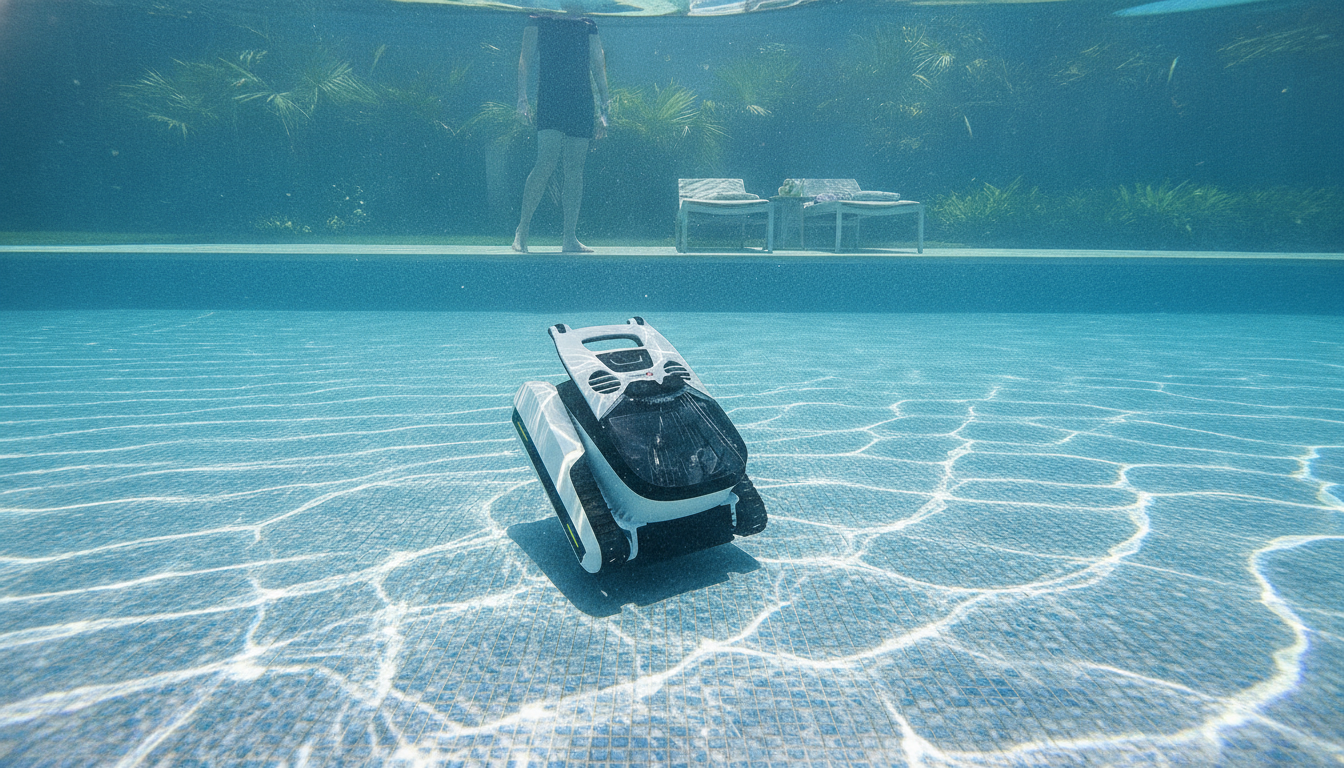
A cordless robotic pool vacuum with sonar path planning is built for pool owners who want cleaner floors with less hands-on effort. Instead of wandering in a random bump-and-turn pattern, it uses sensing to map where it’s been, make more intentional passes, and keep moving without a power cable stretched across the deck. Below is a practical guide to how sonar navigation changes cleaning behavior, what “long-lasting” battery performance tends to mean day to day, and what to confirm for your pool size, surface, and typical debris.
What Makes This Robot “Intelligent”
Traditional pool robots can clean well, but many rely heavily on contact with walls and repeated turns to eventually cover the whole floor. An “intelligent” cordless model adds onboard sensing and decision-making to reduce guesswork during the cycle.
- Uses onboard sensing to plan movement rather than relying only on bump-and-turn patterns.
- Aims for more consistent coverage, especially in rectangular pools where systematic passes reduce missed strips.
- Designed to reduce manual intervention by detecting walls, adjusting direction, and continuing the cleaning cycle.
- Best fit for owners who want set-and-retrieve convenience without dealing with a floating power cord.
How Sonar Path Planning Improves Coverage
Sonar-based path planning helps the robot estimate distance to boundaries and common obstacles so it can drive straighter, make cleaner turns, and avoid spending half its runtime re-cleaning the same square footage.
- Sonar sensing can help maintain straighter paths and more lane-like passes across the floor.
- More deliberate routing can reduce overlap and often helps finish the floor faster on average.
- Improved navigation is especially helpful around steps, drains, ladders, and tanning ledges where random patterns may stall.
- Expect occasional course corrections: a planned path still adapts when it encounters high debris, tight corners, or shifting water flow.
For many pools, the biggest “feel” difference is consistency: fewer missed strips along the middle and fewer repeated loops in the same area. That doesn’t mean the robot will never get momentarily confused by a tight corner or an unusual step layout, but it generally spends more time cleaning and less time searching.
Cordless Design: Convenience, Limits, and Practical Expectations
Going cordless removes one of the most common friction points of robotic pool cleaning: managing the cable. That said, cordless performance is always bounded by battery runtime and recharge time.
- Cordless operation eliminates cable tangles and reduces trip hazards along the pool edge.
- Battery runtime and recharge time determine whether the robot can finish a full cleaning cycle in one go or needs multiple sessions for larger pools.
- Cordless robots are often easiest for quick weekday maintenance; heavy leaf loads after storms may require pre-skimming to avoid rapid filter clogging.
- Storage and charging location matters: keep chargers dry, out of direct sun, and away from chemical fumes to protect electronics.
“Long-lasting” is most valuable when it matches your routine. If the robot reliably completes your pool floor in one cycle, weekly upkeep becomes simple: drop it in, let it run, rinse the basket, and store it. If your pool is larger or gets heavy debris, plan on either a second cycle or a quick mid-cycle basket rinse during peak seasons.
Cleaning Performance: Debris Types and Suction Priorities
Cleaning success depends on matching the robot’s intake and filtration to what actually lands in your pool. Dust and sand behave differently than leaves and seed pods, and a robot can only move what its filter can hold.
Pool Fit Checklist: Size, Shape, and Surface Compatibility
Setup, Daily Use, and Maintenance Habits That Extend Lifespan
For pool safety and water quality best practices, refer to guidance from the CDC Healthy Swimming program, and for broader industry standards and education, visit the Pool & Hot Tub Alliance (PHTA). If you handle pool chemicals, review the CDC’s pool chemical safety recommendations.
Specs at a Glance
| Feature | Why it matters | What to look for |
|---|---|---|
| Sonar path planning | Improves coverage and reduces random overlap | Consistent lane-like movement; fewer repeated passes |
| Battery runtime | Determines whether one cycle can finish the pool | Long enough for the pool floor area; stable performance near end of charge |
| Recharge time | Impacts how quickly a second cycle can start | Practical turnaround for your schedule |
| Filter access and capacity | Controls suction consistency and cleanup speed | Tool-free access; easy rinse; adequate basket volume |
| Debris handling | Matches typical yard and swimmer debris | Works for fine + coarse debris; doesn’t clog immediately |
| Pool surface/shape support | Prevents traction issues or missed zones | Compatible with your surface; handles corners/edges without stalling |
Who This Type of Robot Is Best For
Product Options Available
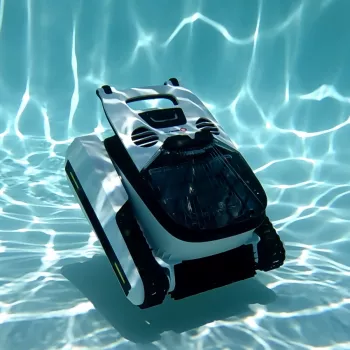
- Intelligent Robotic Pool Vacuum Cordless, Long-lasting, with Sonar Path Planning (In stock): designed for cable-free operation and more systematic cleaning routes using sonar-based navigation.
- AI Tools to Organize Your Life Guide – Ultimate Daily Planner Companion (Digital Download): a helpful add-on for building consistent pool-care routines and reminders.
- “Save Like a Pro!” – The Ultimate Monthly Savings Checklist (Digital Download): useful for planning seasonal pool expenses and maintenance budgets.
FAQ
Will a cordless robotic pool vacuum work in a large pool?
Yes, but it depends on battery runtime and the manufacturer’s recommended pool size. Larger pools may require multiple cycles, and while efficient navigation helps coverage, it can’t exceed the limits of the battery.
Does sonar path planning replace brushing and chemical maintenance?
No. Sonar navigation improves cleaning coverage, but brushing and balanced water chemistry are still important for preventing algae and protecting the pool surface.
How often should the filter basket be cleaned?
For best suction, rinse the filter basket after each run. During heavy debris periods, empty it mid-cycle if you notice reduced pickup or the basket fills quickly.














Leave a comment