Cut Plastic While Traveling: Simple Swaps That Stick
Eco Adventures: Cutting Plastic on the Go
Plastic waste can pile up quickly while traveling—airport snacks, hotel toiletries, takeaway drinks, and “just this once” convenience purchases. A lighter, low-waste approach comes down to planning a few smart swaps, knowing what to refuse, and having a simple routine for refilling and reusing on the road.
Why plastic shows up everywhere on trips
Travel has a way of breaking even the best home routines. When you’re navigating new transit systems, tight schedules, and unfamiliar food options, single-use plastic becomes the default—fast, cheap, and everywhere.
- Travel disrupts routines, making convenience purchases more likely (water bottles, packaged snacks, mini toiletries).
- Transit hubs concentrate single-use items: cutlery, coffee cups, cling-wrapped food, and disposable bags.
- Accommodation “complimentary” items often come in small plastic formats (bottles, wrappers, laundry bags).
- Tours and day trips can mean limited refill access unless planned in advance.
Even when recycling bins exist, collection rules and processing vary by region. That’s why the biggest wins usually come from reducing and reusing first, a point echoed in guidance from the U.S. Environmental Protection Agency.
A simple zero-waste travel setup (carry-on friendly)
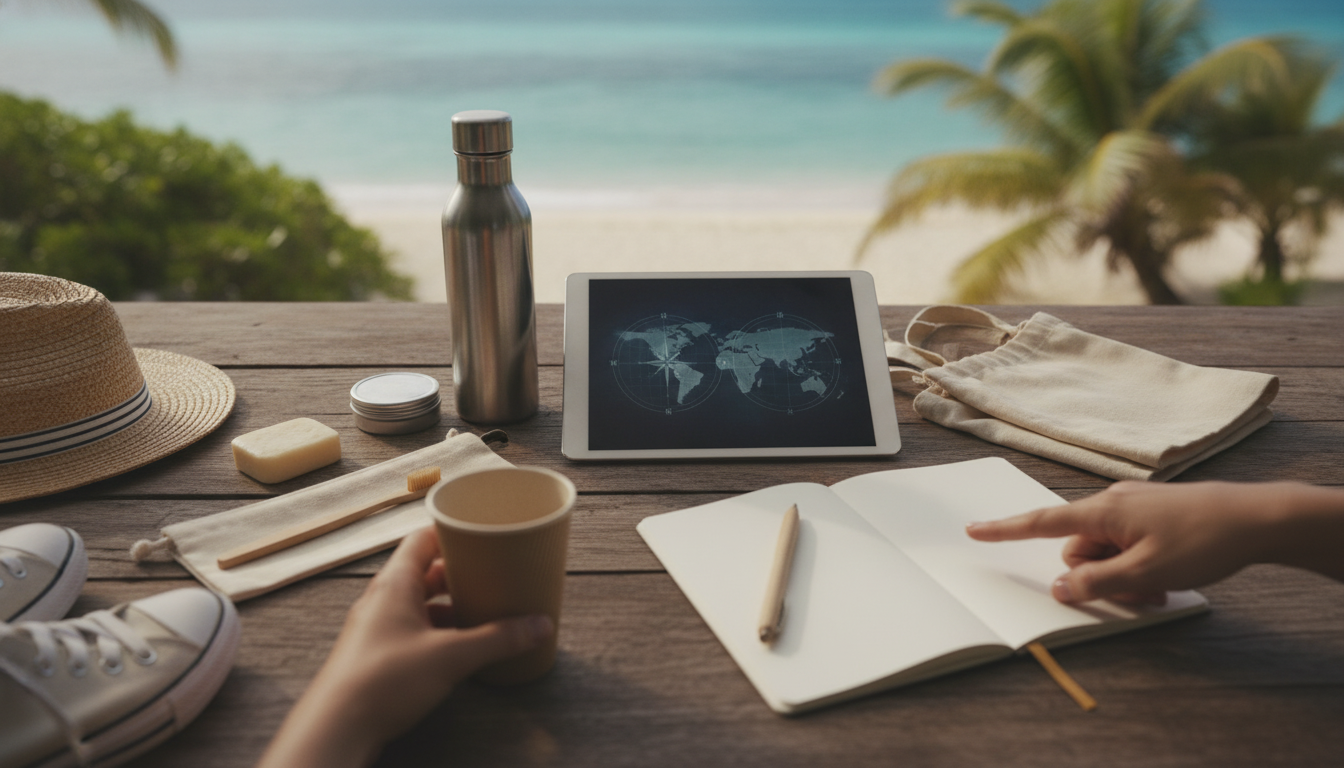
A “plastic-light” kit doesn’t need to be complicated. Think of it as a small system that prevents the most common impulse purchases.
- Reusable bottle + backup plan: choose a sturdy bottle and know refill points (airports, cafes, hotel filtered stations).
- Cup and utensil kit: a lightweight cup, spork, and straw can replace multiple single-use items in a day.
- Food storage: one compact container or silicone bag helps avoid cling film and disposable takeaway boxes.
- Reusable tote or packable day bag for markets and spontaneous purchases.
- Toiletries: solid shampoo/soap bars and refillable minis to reduce tiny plastic bottles.
Common travel plastics and easy swaps
| Plastic-heavy item | Lower-waste alternative | Best time to use it |
|---|---|---|
| Single-use water bottle | Refillable bottle + refill map/plan | Airports, day tours, long train rides |
| Takeaway cutlery | Pocket utensil or spork | Street food, food courts |
| Disposable coffee cup | Collapsible cup or insulated tumbler | Morning commutes, cafe stops |
| Mini shampoo bottles | Solid bars or refillable travel bottles | Hotels, hostels, longer stays |
| Plastic shopping bag | Packable tote | Markets, pharmacy runs |
Cutting plastic at each stage of the journey
Instead of trying to “do everything,” focus on the moments when plastic tends to sneak in. A few consistent decisions across a full trip add up fast.
- Before leaving: pack a small “refill + refuse” kit (bottle, tote, utensils, container, napkin/cloth).
- At the airport: bring an empty bottle through security, refill after; say no to wrapped cutlery and extra napkins unless needed.
- On planes and trains: request drinks “no straw,” keep snacks in a container, and reuse the same cup when possible.
- At hotels: decline daily mini toiletries; use personal refillables and request fewer liners or disposable laundry bags.
- On tours: ask guides about refill stops; bring a snack to avoid last-minute packaged options.
One practical trick: keep your most-used item (often your bottle) in an easy-grab pocket so you’re not tempted to buy a drink just because it’s inconvenient to reach your bag.
Food and drinks: the biggest wins with the least effort
If you only change one category while traveling, make it food and drinks. Water, coffee, and quick snacks create a steady stream of disposable lids, bottles, wrappers, and cutlery.
Zooming out, global single-use plastic is a major environmental challenge, and travel hotspots can amplify the problem during peak seasons. For broader context, see the UN Environment Programme’s overview of plastic pollution.
Respect local systems and reduce waste responsibly
When you’re unsure about drinking water safety, prioritize health first. The World Health Organization’s drinking-water guidance is a helpful reference point for understanding risks and safer options.
A quick routine for a plastic-light day on the road
A practical guide to keep in your downloads folder
If you want a ready-to-use system (instead of piecing tips together), Eco Adventures: Cutting Plastic on the Go (download) is a travel-friendly eBook built around realistic decisions you can repeat across airports, hotels, street food stops, and day tours.
To keep reusables easy to carry (and easier to remember), a dependable day bag also helps. The Calvin Klein Black Print Backpack with Zip offers a clean, practical way to organize a bottle, tote, and small container so they’re ready before you’re already in line ordering.
For travelers who like a structured routine—especially on multi-city trips—the AI Tools to Organize Your Life Guide can pair well with a refill-and-reuse plan by helping you set simple daily checkpoints (morning refill, midday restock, evening rinse) without overcomplicating your day.
FAQ
What are the easiest items to replace to reduce plastic while traveling?
Start with the items you use most often: a refillable water bottle, a packable tote, and a small utensil or spork. Add one compact food container to cut down on wrappers and takeaway packaging quickly.
How can plastic use be reduced when staying in hotels?
Bring solid toiletries or refillable minis and decline mini bottles and unnecessary liners or laundry bags. Reusing towels/linens when appropriate also reduces the stream of single-use packaging tied to daily housekeeping.
What if safe refill water isn’t always available?
Plan refill points in advance and use filtered stations where they’re provided, but prioritize safety if you’re unsure. In destinations with inconsistent water quality, consider purification options and use sealed larger-format water when needed to reduce the number of small bottles.















Leave a comment