Daily Quiet Confidence: Gentle Routine for Social Anxiety
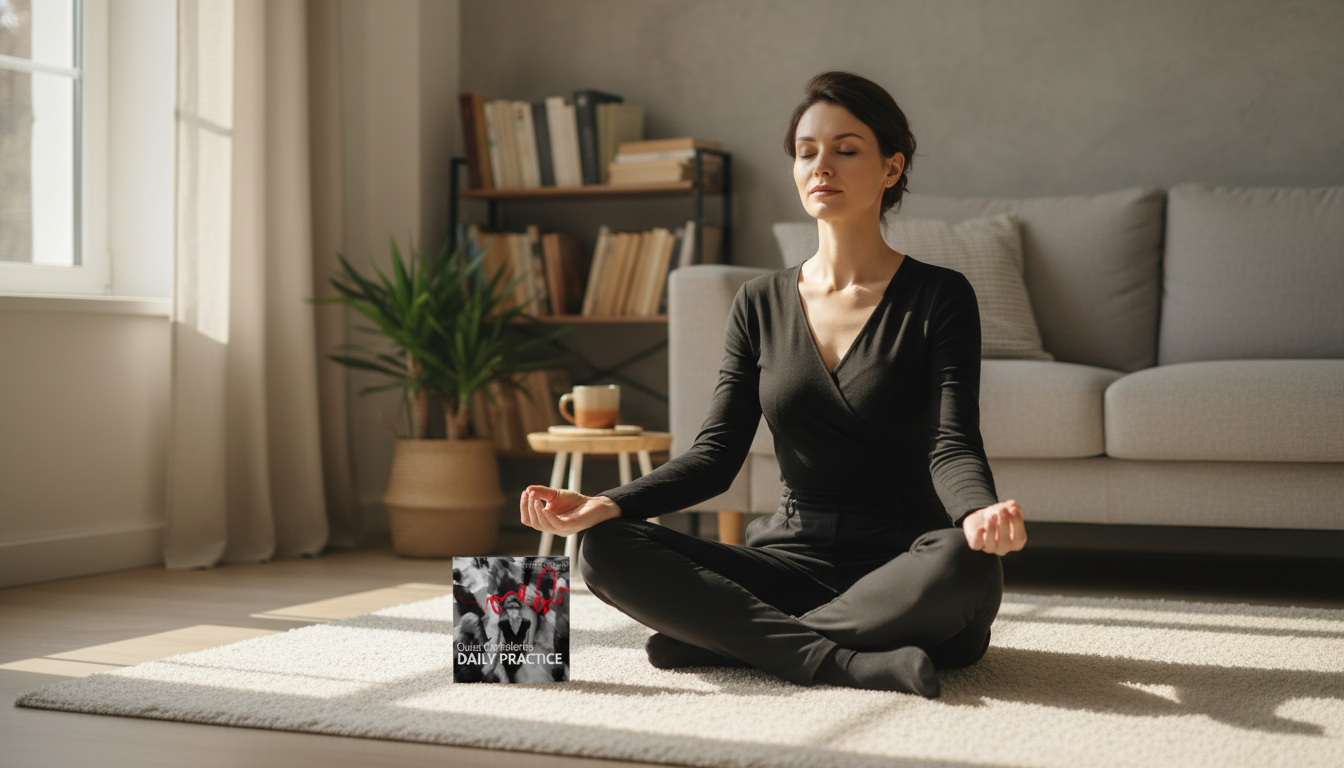
Quiet Confidence, Daily Practice: a gentle routine for social anxiety relief and steady self-assurance
Social anxiety often shows up as a racing mind, a tight chest, and the sense of being “on display.” Lasting change usually comes from small, repeatable habits rather than pressure to be fearless overnight. Quiet Confidence, Daily Practice is a low-pressure digital guide built around simple daily steps that help the nervous system settle, improve self-trust, and make social moments feel more manageable—one calm repetition at a time.
For helpful background on social anxiety and evidence-based support, see the National Institute of Mental Health, the NHS overview, and the American Psychological Association.
What “quiet confidence” looks like in real life
Quiet confidence isn’t loud, flawless, or constant. It’s the steady ability to show up while your body does what bodies do under stress—and to recover with kindness.
- Feeling present in conversations without scanning for mistakes
- Recovering quickly after an awkward moment instead of replaying it for hours
- Choosing small social challenges on purpose, not avoiding everything
- Being kind to the body’s stress response while still taking action
- Building consistency: confidence that comes from practice, not personality
Why gentle routines help social anxiety more than “push harder” plans
“Just be confident” advice usually translates to pressure, self-criticism, and overexposure—followed by avoidance when it feels too big. Gentle structure works differently: it lowers perceived threat, makes practice repeatable, and helps the brain learn that discomfort rises and falls without disaster.
- A gentle structure lowers the threat response and makes practice easier to repeat
- Micro-steps reduce overwhelm and prevent the boom-bust cycle of overexposure then avoidance
- Daily repetition teaches the brain that discomfort can be tolerated and will pass
- Self-assurance grows when actions match values, even in small doses
- Progress becomes trackable: patterns, triggers, and wins become clearer over time
Hard push vs gentle routine (what changes day to day)
| Approach | Typical feeling | Common outcome | A steadier alternative |
|---|---|---|---|
| Force big social leaps | High pressure, fear of failure | Avoidance after a tough day | Choose one small, repeatable step |
| Wait until anxiety is gone | Stuck, self-criticism | Procrastination and shrinking comfort zone | Act with anxiety present, in a manageable dose |
| Measure success by being “smooth” | Hypervigilance | Rumination after interactions | Measure success by showing up and recovering |
| All-or-nothing mindset | Exhaustion | Inconsistent progress | Short routines that fit real schedules |
A simple daily rhythm: morning, pre-social, and evening
A calm routine doesn’t need to be long to be effective. The goal is to build a reliable “nervous system baseline” and a predictable way to reset when anxiety spikes.
- Morning (2–5 minutes): a quick check-in + one calming breath pattern to set baseline
- Midday (1 minute): a body scan to notice tension and release shoulders/jaw
- Pre-social (3 minutes): grounding + a one-sentence intention for the interaction
- During the moment: focus anchors (feet on floor, slow exhale, a curious question)
- Evening (5 minutes): a compassionate debrief: what went okay and what to try next
If you want a ready-to-follow structure that keeps the steps simple, the Quiet Confidence, Daily Practice digital guide lays this rhythm out in a way that’s easy to repeat without turning self-improvement into another stressor.
Quick calm tools for sudden spikes in social anxiety
When anxiety hits fast, the most helpful moves are short and physical—something you can do mid-conversation without drawing attention to yourself.
- Name the sensation, not the story: “My chest feels tight” instead of “This is a disaster.”
- Lengthen the exhale: take 4–6 slow cycles where the exhale is longer than the inhale.
- Grounding: press toes into shoes and notice three points of contact (feet, hands, back).
- Re-orient outward: find one neutral detail (a color, a texture, a sign) to interrupt rumination.
- Use a short script to buy time: “Give me a second to think” or “That’s a good question.”
These tools work faster when practiced on calm days. Think of it like rehearsal: the body learns the sequence, then follows it under pressure.
The gentle exposure ladder: small reps that add up
Exposure works best when it’s doable, repeatable, and paired with recovery. The aim isn’t to bulldoze through fear—it’s to teach your brain that you can handle discomfort and come back to center.
If harsh self-talk flares after exposure, it can help to separate confidence from performance. The Confidence, Not Ego – checklist and quick test is a quick way to spot “ego traps” (like needing to seem perfect) and return to steadier, values-based confidence.
What’s inside Quiet Confidence, Daily Practice (digital guide)
For extra support with day-to-day social warmth (without forcing a big personality), The Art of a Real Compliment offers simple ways to connect that don’t require being “the most interesting person in the room.”
How to use the guide for 14 days without burning out
When to get extra support
FAQ
What is the 333 rule for social anxiety?
The 333 rule is a quick grounding method: notice 3 things you can see, 3 things you can hear, and move or touch 3 things. It helps shift attention back to the present moment and can reduce spiraling thoughts, but it’s a coping tool—not a cure.
How to quickly calm social anxiety?
Try a short sequence: lengthen your exhale for several breaths, drop your shoulders and relax your jaw, feel your feet on the floor, and name one neutral detail you can see. If needed, use a brief script like “Give me a second to think,” and practice these steps outside social situations so they work faster in the moment.













Leave a comment