Heavy-Duty Ratchet Chain Binder Set: Secure Loads Fast
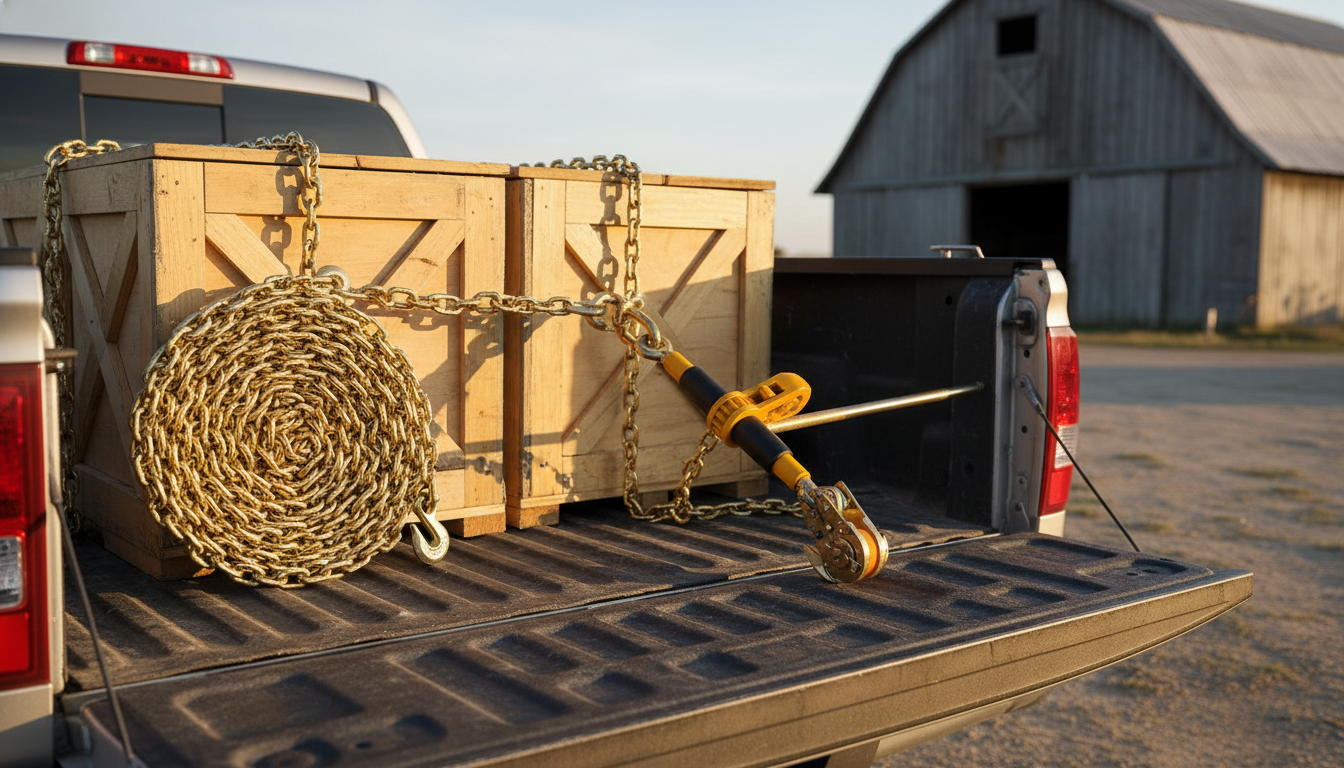
Heavy-Duty Ratchet Chain Binder Set for Secure Load Tie-Downs
A heavy-duty ratchet chain binder set helps keep equipment, pallets, logs, and machinery stable during transport by applying controlled tension to transport chain. When the chain is correctly sized and properly anchored, the binder’s ratcheting action lets you snug loads down, fine-tune tension, and release pressure in a more controlled way than cam-over styles. The result is fewer surprises at the jobsite, less shifting on rough roads, and a tie-down system that’s easier to repeat day after day.
For cargo securement requirements and best practices, it’s worth reviewing the FMCSA Cargo Securement Rules and industry guidance such as WSTDA recommendations on working load limits.
What a ratchet chain binder set does
A ratchet chain binder (often called a load binder) tensions transport chain using mechanical leverage through a ratcheting handle. Instead of relying on a single “over-center” snap, you tighten in short strokes, which helps reduce load movement in a predictable, incremental way.
- Applies leverage through a ratcheting handle to tension chain and limit cargo shift.
- Commonly used on flatbeds, utility trailers, farm wagons, and equipment haulers where high working strength is needed.
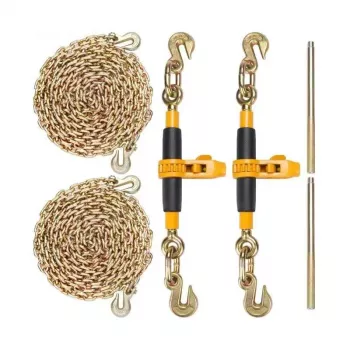
- A “set” typically includes one or more ratchet binders designed to connect to chain hooks and pull chain spans tight.
- Ratchet style supports controlled tightening and controlled release compared with lever (snap) binders, which can recoil if mishandled.
- Best performance comes from correct chain grade, straight load paths, rated anchor points, and enough tie-downs to distribute force.
Key parts and how they work together
Even heavy-duty binders rely on a few simple components working in alignment. When everything is straight and seated correctly, the tool can do its job without damaging chain links or stressing hooks.
- Handle and ratchet mechanism: increases tension with short strokes and helps with fine adjustments when leveling or rebalancing a load.
- Tensioning screw/barrel: draws the hooks closer as you ratchet, shortening the chain span and building tension.
- Hooks (often grab hooks): capture chain links; correct seating reduces twist and link deformation.
- Frame/body: carries the load; robust construction and consistent ratchet engagement matter for repeatable tightening.
- Safety basics: keep fingers away from pinch points and maintain stable footing during both tightening and release.
Common binder + chain pairing checkpoints
| Checkpoint | What to verify | Why it matters |
|---|---|---|
| Chain grade | Binder and chain are rated for compatible working load limits (WLL) | The system is only as strong as the lowest-rated component |
| Hook fit | Hook fully captures the chain link without twisting | Prevents accidental disengagement and reduces stress concentrations |
| Thread condition | Threads are clean, lubricated, and not galled | Improves tensioning control and reduces premature wear |
| Load path | Chain/binder line is straight, not side-loaded | Side loading can deform hooks, links, or binder body |
| Anchor points | Tie-down points are rated and structurally sound | Weak anchors can fail before the binder or chain does |
Choosing the right set for the job
Picking a ratchet chain binder set is less about “biggest-looking tool” and more about matching ratings and fit. A binder that’s great for equipment hauling can be the wrong choice if it doesn’t match the chain or if the hooks don’t seat cleanly.
- Working Load Limit (WLL): choose based on WLL, not break strength. Your securement is limited by the lowest-rated piece (chain, binder, hooks, or anchors).
- Chain size and grade compatibility: confirm the binder is designed for your chain size and transport grade.
- Number of binders: longer/heavier loads generally need multiple tie-down points. More points with moderate tension is typically safer than one binder cranked extremely tight.
- Corrosion resistance: outdoor and roadside use benefits from protective finishes and routine lubrication of threads and moving parts.
- Ease of use: ratchet action is especially helpful when you expect to re-check and re-tension during long hauls.
Safe setup and tightening steps
Consistent load securement starts before the first click of the ratchet. A short inspection and careful alignment can prevent most binder and chain problems seen in the field.
Controlled release and after-transport checks
When to replace a binder or chain components
Heavy-Duty Ratchet Chain Binder Set: quick product snapshot
For demanding tie-downs where you want incremental control instead of a cam-over snap, the Heavy-Duty Ratchet Chain Binder Set is built around controlled tightening and release. Pair it with appropriately rated chain and solid anchor points to create a secure, defensible setup for hauling equipment and other heavy cargo.
| Item | Details |
|---|---|
| Name | Heavy-Duty Ratchet Chain Binder Set |
| Price | 205.01 USD |
| Availability | In stock |
| Product page | View details |
Also in stock
FAQ
What is the difference between a ratchet binder and a lever (snap) binder?
Ratchet binders tighten in small increments and generally allow more controlled release, while lever binders use a cam-over action that can recoil if not handled correctly. Both should only be used within their rated limits and with compatible chain and hooks.
How many chain binders are needed to secure a load?
The right number depends on load weight, length, center of gravity, and the securement points needed to prevent forward, rearward, and side-to-side movement. Using multiple tie-downs to distribute tension is typically safer than over-tightening a single binder.
Can a chain binder be used with any chain?
No. The binder must match the chain size and be compatible with the chain’s working load limit, and the overall system rating is determined by the lowest-rated component in the assembly.















Leave a comment