Statement Pants Styling: Tops, Color, Proportion Checklist
Statement Pants, Perfect Tops: A Checklist for Balanced, Repeatable Outfits
Statement pants can do the heavy lifting in an outfit—color, print, texture, or silhouette—while the right top keeps everything intentional. The easiest way to stop second-guessing is to use a consistent checklist: pick one visual focal point, match proportions, control color, and finish with accessories that support (not compete with) the pants. When you follow the same logic every time, bold pants stop feeling “hard to style” and start acting like a shortcut to a pulled-together look.
Start With the One-Star Rule
Great outfits usually have a clear lead. With statement pants, the pants are often the “star” (pattern, shine, bold color, or an unusual cut), and the top plays a supporting role unless you’re intentionally going maximalist.
- Pick the outfit’s star: If the pants are the attention-grabber, choose a top that adds structure or polish without adding noise.
- Limit competing statements: Loud pants pair best with quiet tops (simple color, minimal print, restrained texture). If you want a loud top, keep pants clean and structured.
- Do the 6-feet-away check: Step back (or use a mirror selfie). Your eye should land where you intend—often the waistline, a long leg line, or a clean color block—not bounce between multiple focal points.
Balance Proportions: A Quick Silhouette Checklist
Proportion is the difference between “fashion” and “costume.” When the pants have volume, the top usually needs definition. When the pants are streamlined, the top can carry more ease.
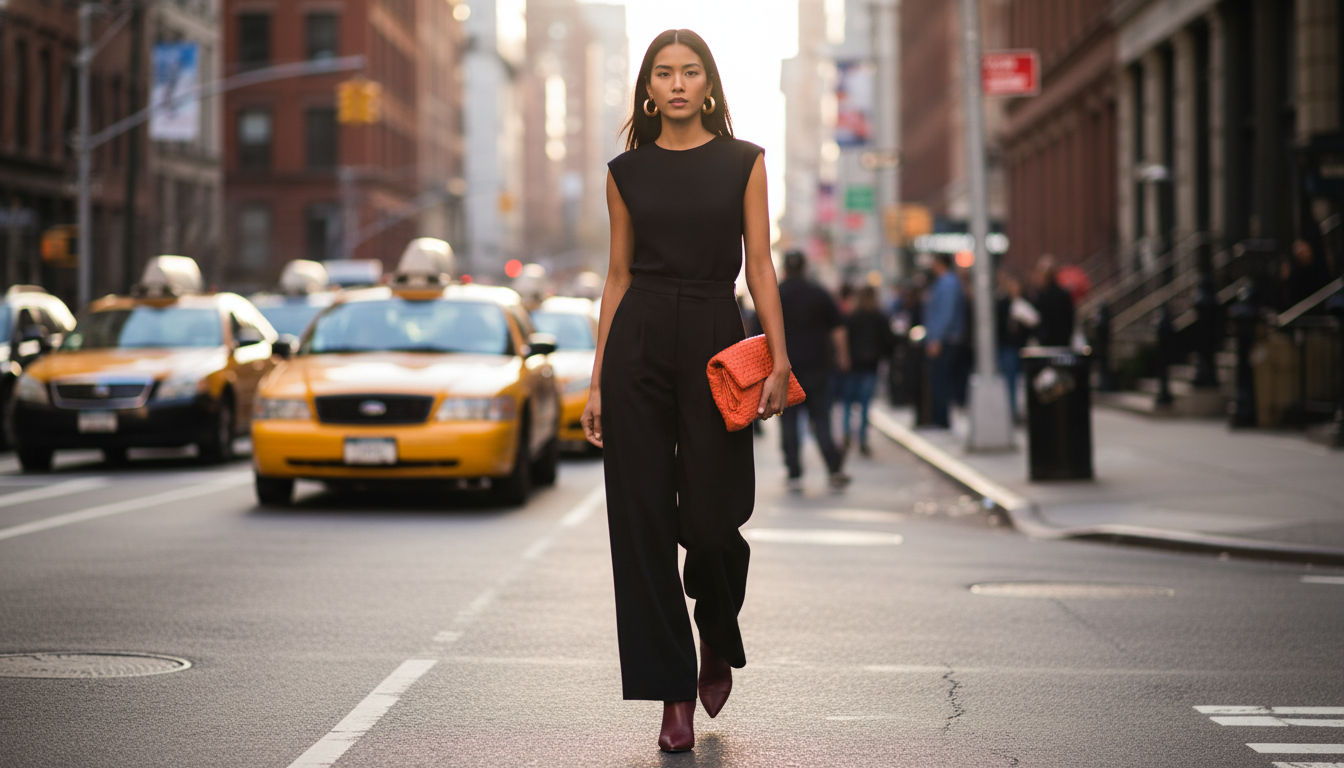
- Wide-leg or palazzo: Pair with fitted tops, cropped knits, bodysuits, or a tucked-in button-down to define the waist.
- Straight or tapered statement pants: These handle more top volume—relaxed tees, roomy knits, and slightly oversized blazers work well.
- High-waist pants: Emphasize the waist with a tuck, a crop, or a belt; avoid long untucked tops that visually cut the body in half.
- Low-rise or drop-waist styles: Keep lines clean—sleek tanks, longer layers, and minimal bulk at the midsection.
Fast top matches by statement-pant type
| Statement pant type | Tops that usually work | What to avoid |
|---|---|---|
| Wide-leg / palazzo | Fitted tee, bodysuit, cropped knit, tucked blouse | Long untucked tops with extra volume |
| Printed or patterned | Solid neutral top, tonal top, simple neckline | Busy prints + busy prints (unless intentional set) |
| Bright color | White, black, navy, gray, denim, or tonal match | Too many saturated accents fighting for attention |
| Leather / metallic / sequins | Matte knit, crisp cotton, minimal hardware | Shiny top + shiny pants without a grounding layer |
| Cargo / utility | Simple tank, fitted long sleeve, structured blazer | Extra pockets/volume on top that add bulk |
Color Pairing That Looks Intentional (Not Accidental)
Color is where statement pants can look either styled or random. The trick is to pick a method, then “repeat” something so the outfit reads planned. If you like learning color language and trend palettes, explore resources like the Pantone Color Institute.
- Neutral anchor method: Choose one neutral top (black, white, cream, navy, or gray) to let the pants stand out; repeat that neutral in shoes or a bag.
- Tonal method: Match the top to the pants’ dominant color family (cobalt pants + softer blue top) for a long, streamlined line.
- Complement method (controlled): Pick a complementary color in a muted shade, then keep accessories minimal so the combo doesn’t feel loud.
- Rule of repeats: Repeat at least one color from the pants elsewhere (top trim, shoe, belt, or earrings) to make the look feel cohesive.
Print, Texture, and Shine: Decide What Gets the Spotlight
When something is visually “busy,” it reads even busier in motion and under real lighting. Let one element lead, and use the rest to add contrast and polish.
- If pants are printed: Go for solids, subtle rib knits, or micro-textures; keep necklines simple (crew, square, clean V) to reduce visual noise.
- If pants are textured (corduroy, tweed, lace): Match with smoother tops (cotton poplin, jersey, fine knit) so the texture looks elevated rather than heavy.
- If pants are glossy (leather, satin, metallic): Ground with matte tops and minimal jewelry; add structure via a blazer or sharp shoulder if needed.
- When mixing prints: Keep scale different (large + tiny), share one common color, and let the rest of the outfit stay quiet and simple.
For deeper context on how garments and silhouettes evolve over time (and why certain combinations feel “classic”), the Museum at FIT is a helpful reference point.
Necklines and Layers That Frame the Look
Occasion Shortcuts: 5 Outfit Formulas
The Printable Checklist (Digital Download)
- Statement Pants, Perfect Tops – Checklist (Digital Fashion Styling Guide) (Digital download)
- Confidence, Not Ego – Checklist to Understand Confidence vs Ego Explained Simply (Helpful for building a confident, consistent personal style mindset)
- The Art of a Real Compliment: How to Give a Genuine Compliment in Every Situation (A practical add-on for events, workwear, and social settings)
FAQ
What top looks best with wide-leg statement pants?
Choose a fitted or waist-defining top—think bodysuits, cropped knits, or a blouse fully tucked in—so the volume stays in the legs and your waistline looks intentional. Try wide-leg printed pants with a solid fitted tee, or wide-leg bright pants with a tucked button-down and a slim belt.
Can patterned pants be worn with a patterned top?
Yes, if you control it: keep one print small-scale, share at least one color between the patterns, and anchor with neutral shoes and a simple bag. Do: stripes with florals (one subtle), or checks with micro-dots; Don’t: two loud, same-scale prints with multiple competing colors.
What shoes work best with statement pants?
Match the shoe to the hem and the vibe: pointed toes elongate and polish, sleek sneakers keep bold pants casual, and a heeled boot works especially well under wide legs. When in doubt, anchor the look with neutral shoes that repeat a color from your top or accessories.









Leave a comment