How to Tell If a Cat Is Truly Happy: Signs to Look For
How can you tell if a cat is truly happy?
A happy cat usually shows a pattern of relaxed behavior rather than one unmistakable sign. Look for a cat who eats normally, explores comfortably, rests in relaxed positions, and chooses to interact with you or other household members. The most useful comparison is your cat’s usual behavior: a confident, content cat may be playful and outgoing, while another may be quietly affectionate.
Context matters, too. A cat can enjoy a calm home without seeking attention all day. Give your cat room to make choices, and notice whether their body and behavior remain relaxed in everyday situations.
What body language suggests your cat feels comfortable?
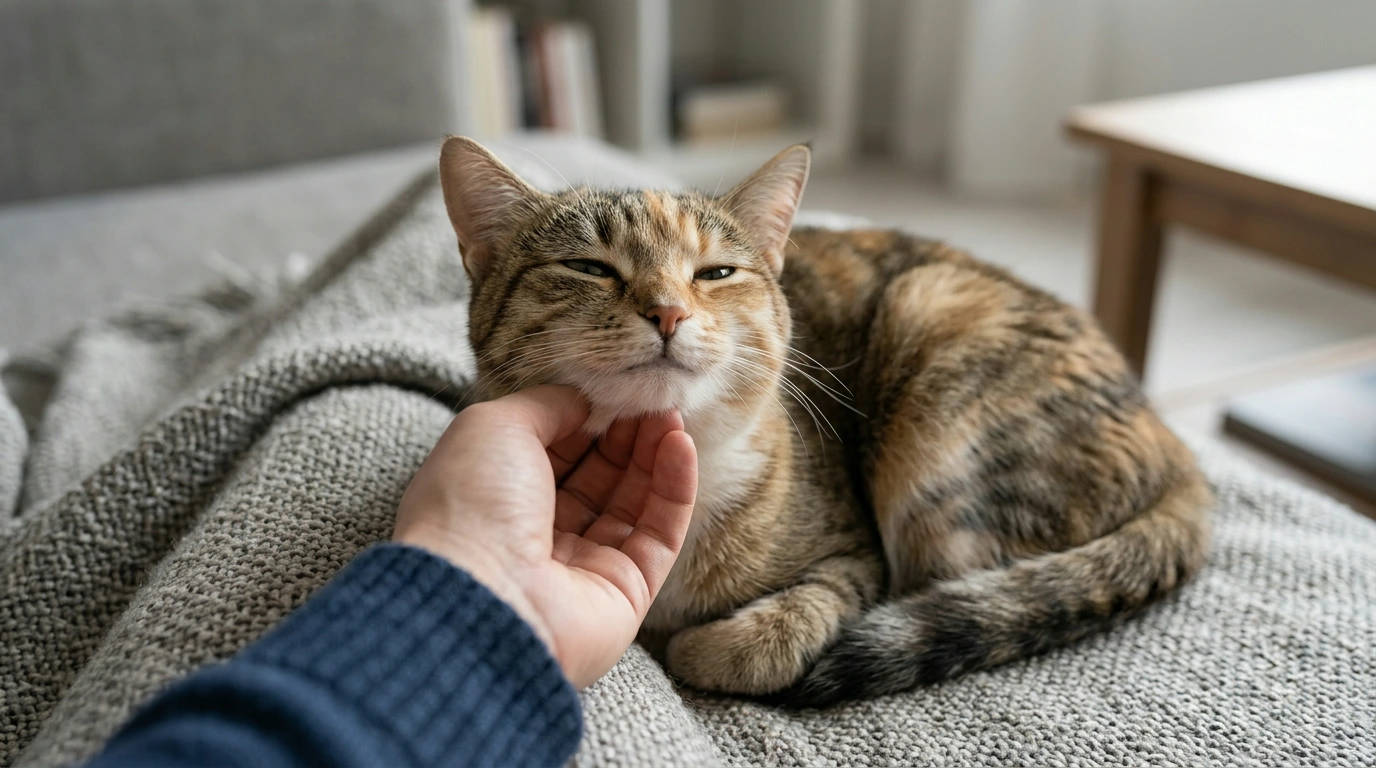
Soft eyes, slow blinks, and ears held in a neutral or forward position often signal ease. Your cat may approach with their tail upright, rub against your legs, or settle nearby with a loose posture. Some cats knead a blanket or purr during pleasant interactions.
Read these signals together rather than relying on one alone. Purring, for example, can also occur when a cat is stressed or uncomfortable. A stiff body, flattened ears, a lashing tail, or an attempt to move away are reasons to pause and give your cat space.
How do play and daily routines show well-being?
A content cat often takes interest in their surroundings and enjoys activities suited to their age and personality. That might mean chasing a toy, watching birds from a window, scratching, or investigating a new cardboard box. Short, regular play sessions can provide an outlet for hunting behaviors without overwhelming your cat.
Our team recommends offering a few toy styles, such as a wand toy for supervised play and sturdy balls your cat can bat around. Put string toys away after play, and avoid small or detachable pieces that could be swallowed. Scratching posts and comfortable hiding spots also give your cat choices throughout the day.
When should a change concern you?
Sudden withdrawal, reduced appetite, changes in litter box habits, unusual aggression, or a noticeable drop in activity can signal stress or illness. Contact your veterinarian about a significant or persistent change, even if your cat still purrs or accepts affection.
For more ways to support a relaxed household, explore our peaceful home cat behavior checklist.
FAQ
Can an indoor cat be happy?
Yes. Indoor cats can thrive with opportunities to play, scratch, climb, hide, and observe their surroundings, along with consistent care and social interaction on their terms.















Leave a comment