Tahitian Pearl Value: What It’s Worth & Why

Is a Tahitian pearl worth anything?
Yes. A genuine Tahitian pearl can be worth a lot, ranging from under $100 to several thousand dollars, depending on quality, size, and how it’s set in jewelry. Tahitian pearls (often called “black pearls,” though they come in many dark tones) are cultured primarily in French Polynesia and are valued for their natural-looking dark body colors, rich overtones, and larger average sizes compared with many other pearl types.
What determines the value of a Tahitian pearl?
Value comes down to a handful of measurable traits. Size matters: larger pearls generally command higher prices, especially once you get into the 10–13 mm range and beyond. Surface quality is also critical; fewer blemishes typically means a higher value. Luster (how sharply the pearl reflects light) is one of the biggest drivers of price—bright, mirror-like luster tends to cost more than a softer glow.
Color and overtone can raise value too. Tahitian pearls can show green, peacock, blue, aubergine, silver, or charcoal tones; certain saturated, complex colors are often priced higher. Shape affects pricing as well: perfectly round pearls are usually most expensive, while baroque shapes can be more affordable (and very stylish). Finally, nacre thickness and matching (for pairs/strands) influence what buyers will pay.
Are all “black pearls” valuable?
No. Some pearls marketed as “black” are dyed freshwater pearls, which are typically less valuable than true Tahitian pearls. The listing details (origin, pearl type, and whether color is natural or treated) matter. Documentation, reputable sellers, and transparent grading descriptions help confirm what’s being purchased.
Does the setting change what it’s worth?
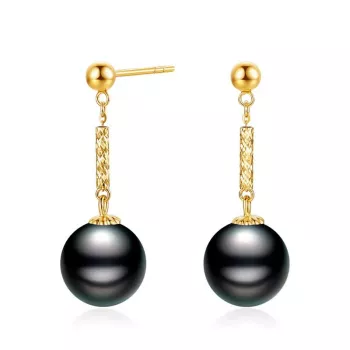
Absolutely. A Tahitian pearl in 18K gold, with secure findings and quality craftsmanship, can be worth significantly more than the pearl alone. If you’re shopping for pearl earrings with a fine-metal setting—especially for a wedding or special event—design and materials can meaningfully raise total value.
For a practical deep dive on selecting 18K gold Tahitian black pearl earrings, read this guide for sizing tips, style considerations, and what details to prioritize.
FAQ
How can you tell if a Tahitian pearl is real?
Look for sharp luster, natural-looking overtones, and minor surface characteristics; overly uniform color can be a red flag. Buy from a reputable seller and request origin details or a grading report when available.















Leave a comment