Kids, Screens & Sleep: A 14-Day Parent Reset Plan
Screen Time and Kids’ Sleep: A Practical Parent Guide
Screens are part of school, social life, and downtime—but they can also make bedtime harder. If your child is suddenly “not tired,” takes forever to fall asleep, or wakes up cranky even after a full night in bed, evening device habits are a smart place to look. The goal isn’t to eliminate screens completely. It’s to set boundaries that protect sleep quality while keeping the peace (most nights).
Why screens can disrupt sleep
Screen time affects sleep through a few predictable pathways. Once you know them, it gets easier to pick the change that will make the biggest difference for your child.
- Evening light exposure: Bright light—especially in the hours before bed—can delay the body’s natural “sleepy” signals and push bedtime later.
- High-alert content: Fast-paced games, suspenseful videos, and emotional social content can raise arousal, making it harder to power down after the device is put away.
- Notifications and messaging: Buzzes, pings, and “just checking” can fragment sleep even after your child falls asleep.
- Time displacement: Screens quietly replace the wind-down routine (bath, book, chat, lights down) that helps the brain transition into sleep.
- Bed associations: Using a device in bed can train the brain to connect the bed with wakefulness rather than sleep.
Common signs a child’s sleep is being affected
Occasional late nights happen. Screen-related sleep issues tend to look more like patterns than one-off events.
- Taking longer than 20–30 minutes to fall asleep most nights
- Bedtime stalling that escalates when device time is reduced
- Waking during the night to check a phone/tablet, or anxiety about missing messages
- Morning irritability, headaches, or difficulty waking despite enough time in bed
- Weekend “catch-up sleep” that shifts the body clock later and makes school-night sleep worse
If you’re unsure whether your child is getting enough total sleep for their age, the CDC’s sleep duration guidance is a helpful benchmark.
What to aim for: simple screen boundaries that support sleep
Start with one or two boundaries that are easy to repeat. Consistency typically matters more than perfection.
Screen-related changes that often improve sleep
| Change to try | Who it helps most | Why it works | Easiest way to start |
|---|---|---|---|
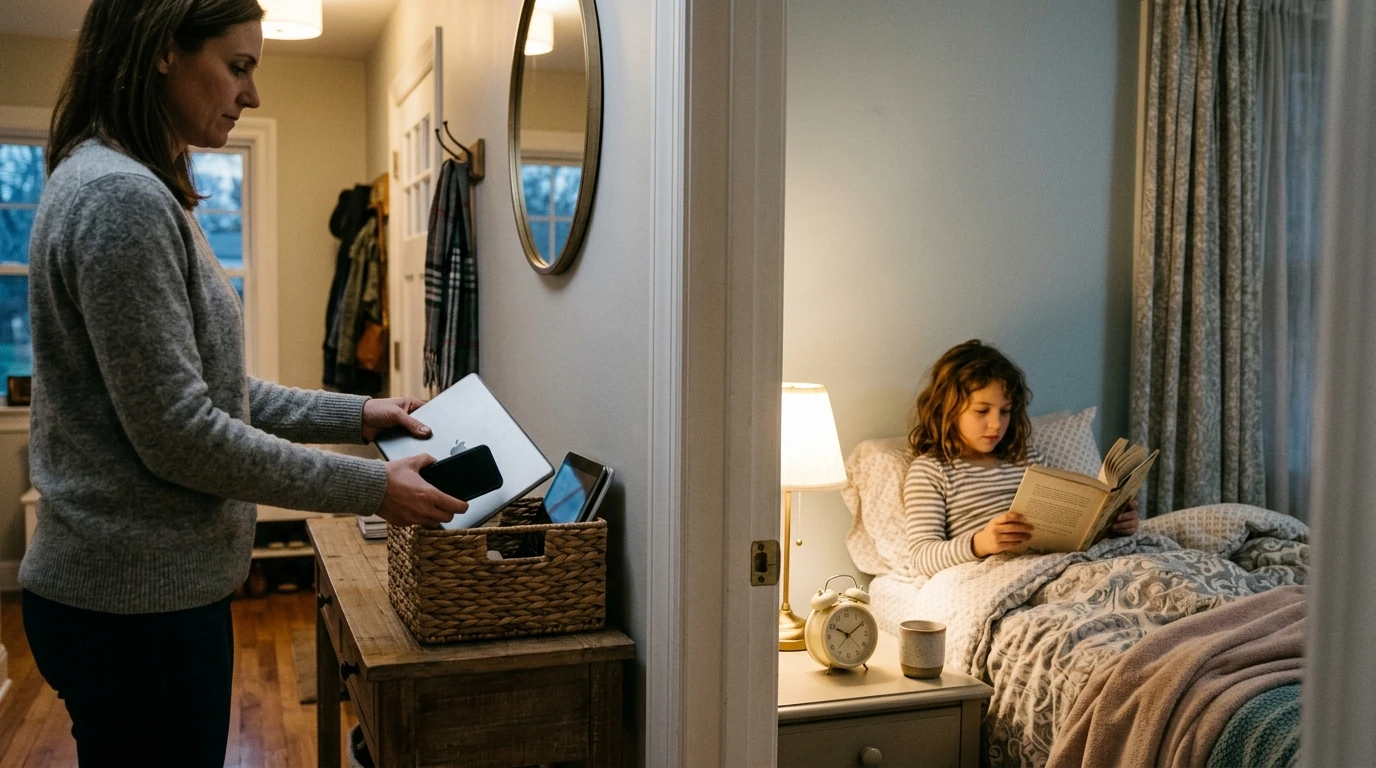
| Device-free bedroom | Kids who wake at night | Reduces late checking and nighttime alertness | Charge devices in a common area |
| Earlier cut-off (30–60 minutes before bed) | Kids who can’t fall asleep | Supports melatonin timing and wind-down | Set a daily reminder and a clear “last call” |
| Swap to calming activities | Kids who feel “wired” | Lowers arousal and smooths transition | Books, coloring, puzzles, quiet music |
| Notification limits / Do Not Disturb | Tweens/teens | Prevents sleep disruption and social pressure | Schedule DND automatically at night |
| Consistent wake time | Kids with shifting bedtimes | Stabilizes circadian rhythm | Keep wake time within ~1 hour on weekends |
Age-by-age guidance (preschool through teens)
Preschool (3–5)
School-age (6–12)
Tweens/teens (13+)
Neurodivergent kids
If a child uses a device for calming
A 14-day reset plan (low-conflict, measurable)
Measure progress by time-to-sleep, nighttime awakenings, morning mood, and ease of waking—not just “hours in bed.” For age-based sleep needs, the National Sleep Foundation offers a quick reference.
Troubleshooting common bedtime battles
Tools and routines that make the change stick
- Family media agreement: Keep rules simple, written, and calm. The American Academy of Pediatrics Family Media Plan is a solid starting point.
- Environmental supports: Dim lamps, a bedtime playlist, a printed routine checklist, and a charging basket outside bedrooms.
- Device settings: Scheduled Do Not Disturb, app limits, and moving highly stimulating apps off the first screen in the evening.
- Replacement activities list: Keep 10 quick options that feel like a reward (warm shower, snack, journaling, read-aloud, stretching).
- Weekly review: One short check-in to adjust for school deadlines, sports seasons, and energy levels.
If you want a simple reference you can follow without reinventing the plan every night, How Screen Time Affects Kids’ Sleep | Parent Guide to Screen Time and Sleep Quality (Digital Download) is designed to be used on your phone or printed for the fridge.
For families who do best with structured routines, pairing sleep boundaries with a daily planning system can reduce late-night “I forgot” stress. AI Tools to Organize Your Life Guide – Ultimate Daily Planner Companion (Digital Download) can help organize homework blocks, practice schedules, and screen windows so bedtime isn’t the first thing to get squeezed.
Printable guide for parents (digital download)
When expectations are visible, you spend less energy negotiating. The printable parent guide (digital download) includes common sleep-disrupting screen habits, practical fixes, a 14-day reset plan, and routine ideas that keep the evening calm and consistent.
FAQ
How long before bedtime should screens be turned off?
Many families do well with a 30–60 minute cut-off before the bedtime routine starts. Kids who are especially sensitive to evening stimulation may benefit from a longer buffer, but consistency is what makes the boundary work.
Does blue light blocking solve the sleep problem?
Blue-light reduction can help, but it doesn’t address stimulating content, time displacement, or notifications. It works best when paired with a calming wind-down routine and limits on late-night alerts.
What if a teen needs a phone for safety or school communication at night?
Keep the phone charging outside the bedroom, use scheduled Do Not Disturb with approved exceptions, and agree on a clear plan for urgent contact. This protects sleep while keeping legitimate communication available.
















Leave a comment