Style Confidence Psychology: Power in Your Wardrobe

Clothing is more than decoration—it’s a daily set of cues that can shift posture, energy, and how decisions are made. When outfits align with identity and intent, getting dressed becomes a simple confidence practice rather than a source of doubt. This guide breaks down the psychology behind style confidence and offers practical ways to build a wardrobe that supports calm focus, self-trust, and consistency in everyday life.
Why what you wear can change how you feel
What you put on in the morning does quiet, continuous work in the background. Clothes act as signals—first to you (identity, capability, readiness), and then to other people (presence, boundaries, professionalism, approachability). When an outfit feels aligned, the mind tends to spend less time “checking” itself.
One of the most useful ideas is “felt fit”: the combination of comfort, authenticity, and appropriateness for the day. Even small improvements here often reduce self-monitoring and mental noise. A waistband that doesn’t pinch, shoes that don’t make you brace with each step, and fabrics that breathe can all translate into less distraction.
Confidence often rises when outfits remove friction: fewer adjustments, fewer worries about transparency or tugging, easier movement, and predictable coordination. The goal isn’t perfection. It’s reducing uncertainty so attention can move from appearance-checking to action-taking.
The psychology of style confidence: what actually drives it
Enclothed cognition
Research on enclothed cognition suggests that the symbolic meaning attached to garments can influence attention and performance—especially when the clothing feels “right” for the role. It’s not magic; it’s association. When a piece reliably matches how you want to show up (clear, creative, capable), it can help cue that state.
Embodied feedback
The body teaches the brain. Posture, gait, temperature, and tactile comfort can nudge mood and assertiveness—an idea connected to embodied cognition (overview: Stanford Encyclopedia of Philosophy). Restrictive pieces can raise irritability and distraction; supportive, breathable pieces can make it easier to feel steady.
Identity reinforcement
Repeating outfits that match your values (grounded, bold, precise, artistic) strengthens self-consistency. Over time, this can build a practical sense of self-trust—similar to how confidence grows through repeated “I can do this” evidence (related concept: self-efficacy).
Social calibration
Confidence often increases when clothing matches the context. Overdressing can feel like you’re “performing,” while underdressing can feel like you’re unprepared—even if the outfit looks great. Context matching is not about rules; it’s about reducing avoidable self-consciousness.
From “clothes wearing you” to wearing your clothes
When clothes “wear” someone, the outfit controls behavior: constant adjusting, hiding, bracing, or performing for imagined judgment. You can tell it’s happening when you keep checking your reflection, pulling fabric into place, or spending social time thinking about what your outfit is “saying.”
Wearing your clothes means the outfit serves a purpose. It supports movement, communicates intent, and feels aligned with the day. A simple reset is to run three quick checks:
- Can it be ignored once it’s on? (No tugging, pinching, slipping, gaping.)
- Does it match the day’s role? (Work mode, errands, social, rest.)
- Does it feel like a true version of you? (Not a costume, not a compromise.)
Confidence grows faster when outfits are chosen for function and identity—not for approval chasing.
A simple system for everyday confidence dressing
1) Build a confidence baseline
Start with 2–3 outfits that reliably feel comfortable and put-together for your most common scenarios. These are your “default wins” for days when energy is low or time is tight. The baseline prevents the spiral of “nothing to wear,” which is often just decision fatigue in disguise.
2) Create a style signature you can repeat
3) Add one intentional detail
4) Protect comfort standards
| Wardrobe lever | How it can feel in the body | Mindset cue it often reinforces | Quick example |
|---|---|---|---|
| Structure (tailoring, crisp lines) | Upright, composed | Authority, clarity, boundaries | Blazer or structured jacket over a simple base |
| Softness (knits, drape, breathable fabric) | Calm, ease | Approachability, steadiness | Fine knit top + relaxed trousers |
| Color contrast (light/dark, bold accents) | Alert, energized | Visibility, courage | Neutral outfit + one strong color accent |
| Fit you can forget | Unselfconscious, mobile | Focus, competence | High-rise pants that don’t pinch + supportive shoes |
| Repetition (a reliable uniform) | Stable, grounded | Consistency, self-trust | Two-silhouette rotation in a tight palette |
Common confidence traps—and quick fixes
Building a wardrobe that supports your week, not a fantasy life
A guided way to apply the mindset shift
For a deeper, step-by-step method that connects clothing choices to emotions, habits, and identity, explore Power in Your Wardrobe – Ebook on How Style Confidence Changes Mindset, Personal Style Psychology & Everyday Confidence Boost.
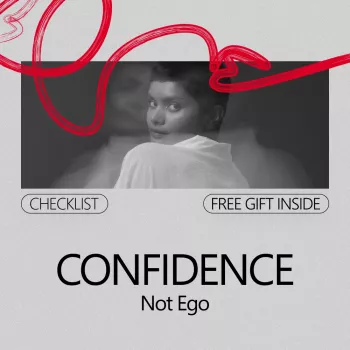
To keep confidence grounded (and avoid slipping into overcompensation), use a quick self-check like Confidence, Not Ego – Checklist to Understand Confidence vs Ego Explained Simply | Daily Builders, Ego Traps, AI Tips & Quick Test so wardrobe upgrades support steady self-trust rather than pressure to “look confident.”
FAQ
What does Giorgio Armani’s quote about clothes wearing you really mean for personal style?
It means the outfit shouldn’t control your behavior through discomfort, trend pressure, or fear of judgment. If you’re constantly adjusting, hiding, or second-guessing, reset with three checks: comfort (can you forget it’s on?), context (does it fit the day?), and identity (does it feel like you?).
What’s the psychology behind wardrobe styling and making people feel confident?
Confidence often rises through enclothed cognition (symbolic meaning), embodied feedback (comfort and posture), identity reinforcement (repeatable self-consistency), and context matching (feeling appropriately dressed). Styling works best when it reduces friction so attention moves from monitoring appearance to taking action.












Leave a comment