Homework Hustle: 10-Minute Starts That Get It Done
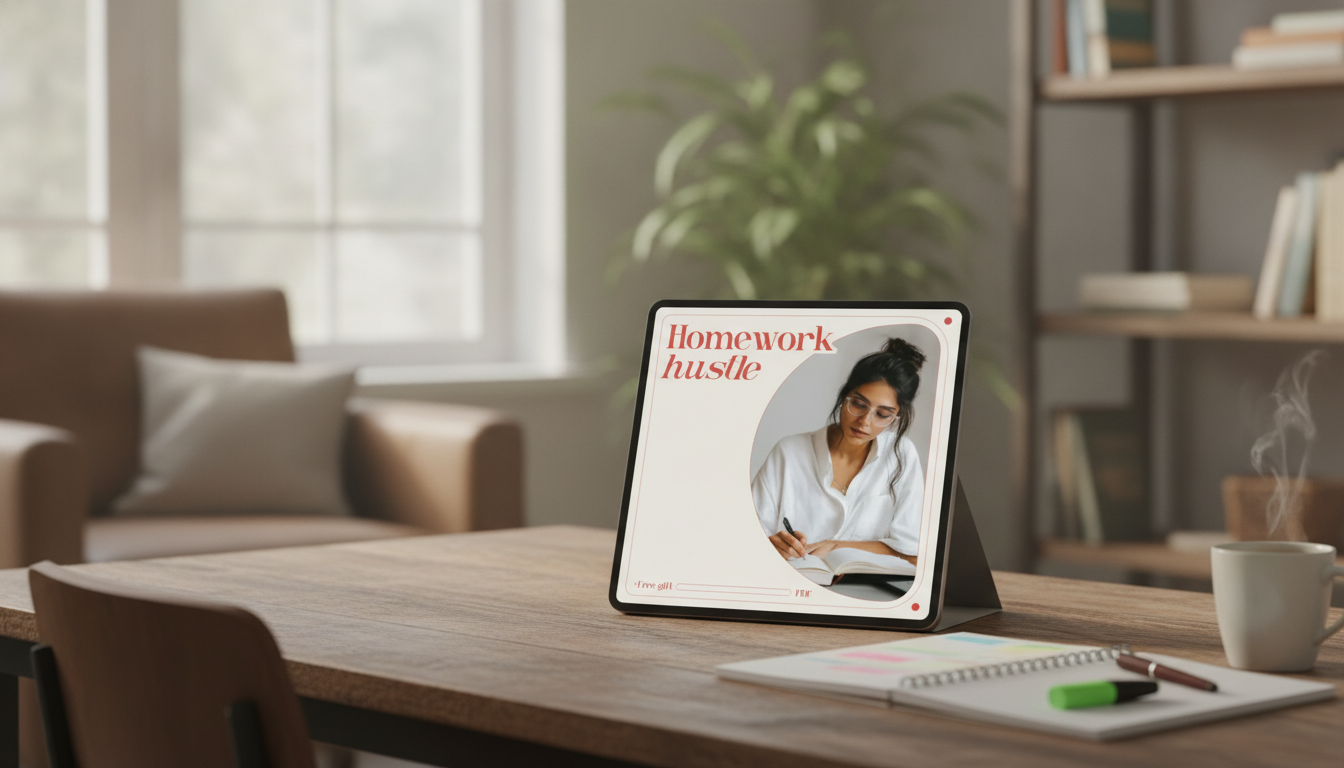
Homework Hustle: Practical Ways to Spark Motivation and Finish Homework
Homework motivation often disappears when tasks feel unclear, too big, or emotionally draining. A better approach is to build quick momentum with tiny starts, clear priorities, and a study setup that reduces friction. The goal is steady progress that feels doable—especially on low-energy days—so assignments get finished without last-minute panic.
Why homework feels impossible sometimes
When homework feels “physically impossible,” it’s usually not laziness—it’s a mix of unclear demands, stress, and timing.
- Task ambiguity: directions are vague, the first step is unclear, or the rubric feels intimidating.
- Mental overload: multiple deadlines compete for attention, making it hard to choose what to start.
- Low reward timing: effort happens now, but grades or feedback come later, which weakens drive.
- Perfection pressure: fear of doing it wrong can create avoidance that looks like procrastination (see the APA definition of procrastination).
- Energy mismatch: attempting heavy work at a low-energy time increases frustration and delays.
Start fast: a 10-minute ignition routine
If starting is the problem, make starting the whole goal. Ten minutes is enough to create momentum without needing a big burst of willpower.
- Do a “one-sentence goal”: write what “done” looks like (example: “Complete 8 math problems and show work”).
- Shrink the entry point: commit to 10 minutes only; starting is the win.
- Open-only rule: open the document, book, or tab first—no deciding, no planning, just access.
- Micro-step list: write 3 tiny actions (find assignment, gather materials, do first question).
- Reward the start: after 10 minutes, take a 2–3 minute reset (water, stretch), then continue.
Timed work cycles pair well with this approach; the Pomodoro Technique is a simple framework for alternating focus and breaks.
Make the work feel smaller: break homework into finishable pieces
Big assignments become doable when they’re converted into checkpoints you can actually finish in one sitting.
- Convert assignments into checkpoints: outline → first draft → revise → final format → submit.
- Use the “two-minute clarity check”: reread instructions and circle required outputs (pages, problems, citations, format).
- Batch similar tasks: do reading notes together, then switch to writing; reduce context switching.
- Plan for the hardest 15 minutes: identify the most confusing part and handle it early while focus is highest.
- Stop in the middle on purpose: end a session after setting up the next step (example: next paragraph topic), so restarting is easier.
When stress is running the show, even a small plan can calm the nervous system and make the next step feel safer (see the APA overview on stress).
Build a study environment that removes friction
Environment is “invisible motivation.” If your setup makes starting easy, you’ll start more often—without negotiating with yourself.
- Choose a single home base: use one consistent spot for homework to reduce setup time and decision fatigue.
- Prepare a two-item launch kit: charger + water (or notebook + pencil) so sessions don’t stall.
- Silence the biggest distraction: block the top 1–2 apps/sites during work blocks instead of trying to perfect everything.
- Use visual cues: keep the current assignment visible (sticky note or open tab) so attention doesn’t drift.
- If noise helps, make it consistent: instrumental music or white noise can become a “focus trigger.”
If you’re often studying on the move (library, after-school, a friend’s house), a dedicated bag helps keep supplies predictable. The Calvin Klein Black Print Backpack with Zip is a sturdy option for carrying a consistent “launch kit” without re-packing from scratch every time.
Motivation follows action: simple systems that keep you going
Once you start, the next challenge is staying with it. Use systems that create visible progress and make “quitting” less tempting.
For a structured, print-friendly way to turn these systems into a repeatable routine, Homework Hustle: How to Spark Motivation and Get It Done (Digital Download) lays out quick-start steps and “low-energy day” options so you can keep moving even when motivation is missing.
When you feel stuck: quick fixes for common roadblocks
A one-page plan: from after-school to submission
Quick Homework Plan (Fill-In Template)
| Step | What to write | Example |
|---|---|---|
| 1. Define “done” | Output required (problems/pages/format) | “10 algebra problems, show work, upload photo” |
| 2. First micro-step | Smallest action to begin | “Open the assignment and do problem #1” |
| 3. Work blocks | Number of focus cycles needed | “2 cycles for math, 3 for essay draft” |
| 4. Help needed | Question to ask if stuck | “What does the rubric mean by ‘analyze’?” |
| 5. Submission check | Time buffer + final checks | “Submit by 7:30; confirm file opens” |
A guided download for building consistent homework habits
If planning and organization are the bigger challenge—juggling assignments, activities, and deadlines—AI Tools to Organize Your Life Guide (Digital Download) is a helpful companion for building a clearer daily workflow.
FAQ
What if motivation never shows up?
Start first and let motivation catch up. Commit to a 10-minute session, do one tiny micro-step, then take a short break as a reward before continuing.
How can homework get done faster without rushing?
Clarify requirements early, batch similar tasks, and use timed focus blocks so you stay in one “mode” longer. Finish with a quick submission checklist to prevent rework and last-minute fixes.
What’s a good homework routine for students who get distracted easily?
Use a consistent start cue (same time or trigger), simplify the workspace, and block just one or two major distractions. Work in brief 25/5 cycles and always write the next step before you stop.
















Leave a comment