Quiet Shame Self-Talk: 3 Steps to Real Self-Compassion
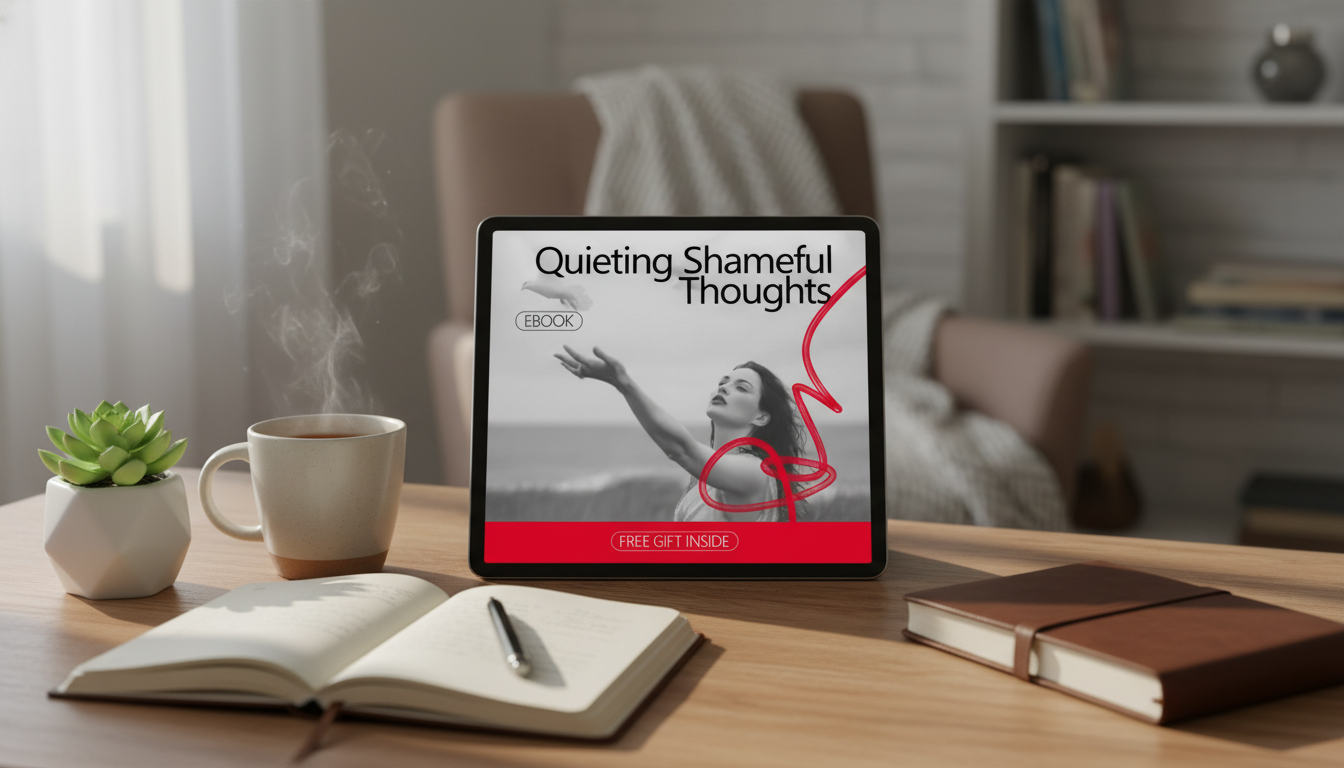
Quieting Shameful Thoughts: A Gentle Path to Self-Compassion and Calmer Self-Talk
Shame has a way of sounding like a “truth” even when it’s only a habit of mind. When the inner voice repeats harsh judgments, it can shrink motivation, connection, and hope. A gentler approach focuses on noticing shame thoughts, reducing their intensity, and replacing them with language that supports growth rather than punishment.
What Shameful Thoughts Sound Like (and Why They Stick)
Shame often shows up as sweeping, identity-based statements: “I’m bad,” “I’m broken,” “Everyone can tell,” “I always ruin things.” These thoughts feel urgent because the brain treats social threat (rejection, embarrassment, being “found out”) as a real danger.
It helps to separate shame from guilt. Guilt targets a behavior (“I did something wrong”) and can motivate repair. Shame targets identity (“I am wrong”) and tends to trigger hiding, rumination, or self-attack. That difference matters, because the mind can learn from behavior-focused feedback, but it often freezes under identity-based condemnation.
Shame thoughts also stick because of how attention works under stress: threat-sensing ramps up, memory tilts toward negative moments, and old patterns learned through criticism or rejection replay automatically. The aim isn’t to erase every negative thought; it’s to lower the volume and change the relationship to the thought—so it becomes information you can respond to, not a verdict you must obey.
| When the mind says… | Try a gentler translation… | Next small step |
|---|---|---|
| “I’m a failure.” | “Something didn’t work out, and that hurts.” | Name one fixable part and take one 5-minute action. |
| “I shouldn’t feel this way.” | “This is a human feeling, not a flaw.” | Breathe out longer than you breathe in for 60 seconds. |
| “Everyone is judging me.” | “My mind is guessing; I don’t have proof.” | Look for 2 neutral facts you can verify. |
| “I always mess up.” | “I’m noticing mistakes; I’m not noticing progress.” | Write 1 recent win, even if small. |
A Gentle 3-Step Reset for the Moment Shame Hits
When shame spikes, logic usually loses. A short reset works best when it starts with the body and stays believable.
Step 1 — Notice and name (softly)
Use a low-drama label: “shame is here,” “self-criticism is loud,” or “this is that old story.” Naming creates just enough space to respond instead of react.
Step 2 — Normalize (without excusing)
Remind yourself that shame is a common protective response, not a personal defect. Your mind may be trying to prevent rejection or failure by pushing you to “do better,” even if the method is harsh.
Step 3 — Choose one kinder sentence you can partly believe
Aim for something you can accept even 10%: “This is hard, and I can still be on my side.” If emotions surge, calm your body first—shoulders down, jaw unclench, slow exhale—then come back to words.
How to Reduce Shame Thoughts Without Fighting Your Mind
Arguing with shame can accidentally amplify it, because the brain hears a debate as proof the threat is real. Instead, shift from fighting thoughts to observing them.
- Practice “A thought is not a command.” You can have a thought and choose a different action.
- Try “thank you, mind.” It sounds odd, but it acknowledges the brain’s attempt to protect you and helps you redirect attention.
- Use distancing language. Replace “I am…” with “I’m having the thought that…” This reduces fusion with the storyline.
- Reduce rumination fuel. Sleep loss, hunger, and isolation often intensify harsh self-talk. Basic care can be a mental-health intervention.
- Create a post-trigger routine. A quick walk, water, light stretching, or a 3-minute journal entry can interrupt the spiral.
For a research-backed look at why a kind approach helps, see the American Psychological Association’s overview of self-compassion.
Building Self-Compassion That Doesn’t Feel Fake
Self-compassion isn’t self-pity or letting yourself off the hook. It’s support paired with accountability—like a steady coach instead of a cruel critic. If kindness feels impossible, start with neutrality: “I’m learning,” “This matters to me,” or “I’m doing the next right thing.” Neutral compassion is often more believable in the beginning, and believability is what makes new self-talk usable under stress.
A simple framework is:
- Mindfulness: notice pain without exaggerating it or denying it.
- Common humanity: remember that struggling doesn’t mean you’re alone or uniquely flawed.
- Kindness: respond with care that supports change.
To explore the science behind these pillars, Kristin Neff’s research hub is a helpful starting point: The Science of Self-Compassion.
Rewriting Negative Self-Talk: Scripts That Promote Change
A Simple Daily Practice (5 Minutes) to Lower Shame Over Time
When Extra Support Helps
A Gentle Guide to Practice With
If structure helps, a guided resource can make it easier to practice when motivation is low. Quieting Shameful Thoughts – A Gentle eBook Guide on how to reduce shame thoughts, Build Self-Compassion, and Rewrite Negative Self-Talk is designed to support calmer self-talk with prompts, practical reframes, and a steady, non-punishing approach to change.
Shame often tangles with confidence—sometimes collapsing it, sometimes masking it with overcompensation. A quick clarity tool can help: Confidence, Not Ego – Checklist to Understand Confidence vs Ego Explained Simply | Daily Builders, Ego Traps, AI Tips & Quick Test.
And because self-compassion grows in relationships too, practicing warm, realistic language outward can make it easier to use inwardly. The Art of a Real Compliment: How to Give a Genuine Compliment in Every Situation offers practical phrasing that can strengthen connection without feeling forced.
FAQ
How do you shut down negative self-talk?
Name the thought (“self-criticism is here”), slow your exhale for a minute, then create distance with “I’m having the thought that…”. Replace it with one believable compassionate line and a tiny next action you can do right away.















Leave a comment